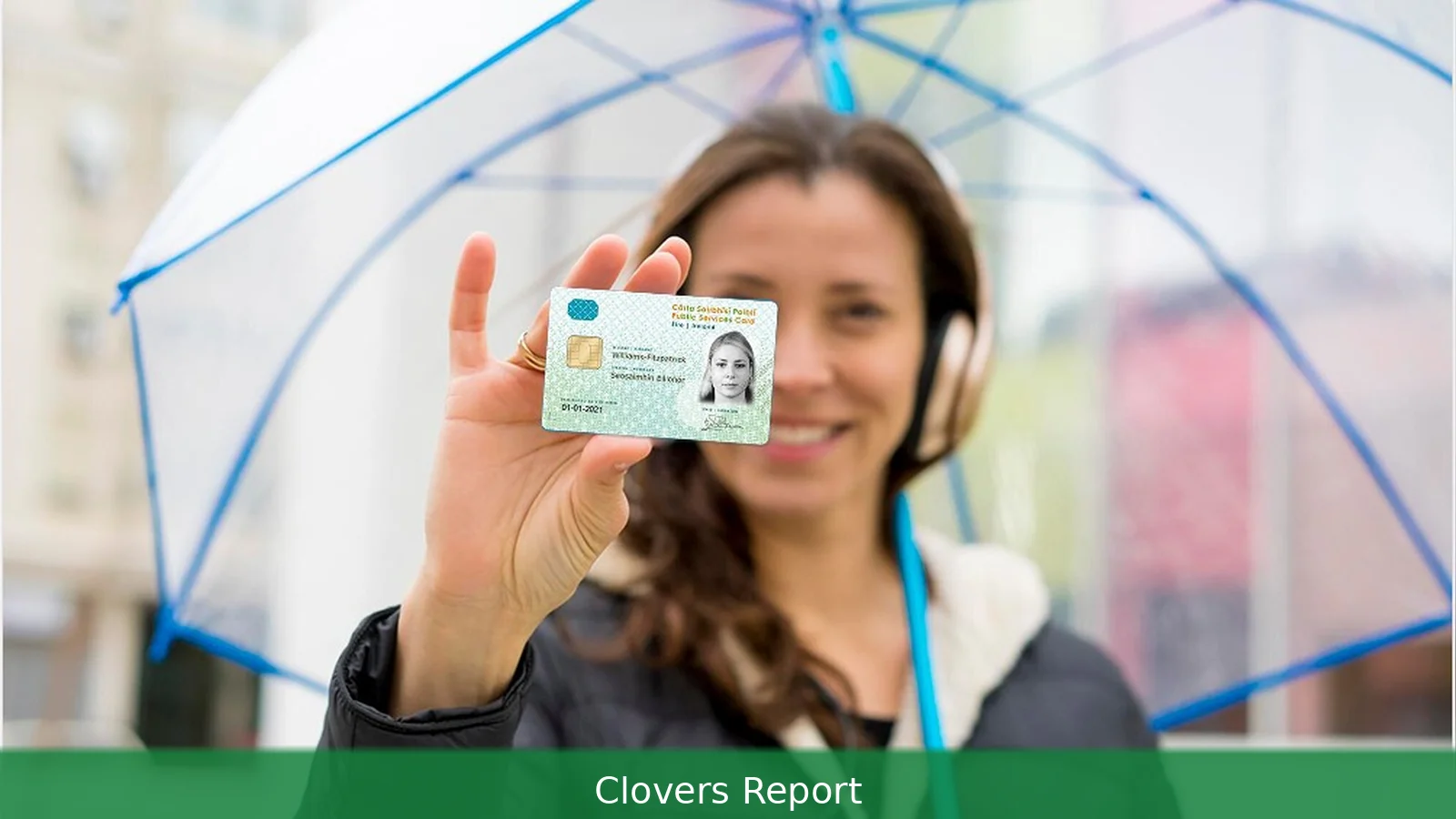
If you're an international student planning to study in Ireland in 2026, you'll need a PPS Number. Here's a quick guide on why you need one, who should get it, what documents to bring, the steps to apply both online and in person, and common mistakes students often make. You can use this as a checklist before you travel or once you arrive.
Quick reference
Here’s the fast version — everything in one place.
- PPS Number format: 7 numbers followed by one or two letters (for example 1234567A).
- Cost: Free to apply.
- Apply online if aged 18+ via MyWelfare (create a MyGovID) — Mywelfare.ie.
- Or book/attend a PPS Number Allocation Centre — details at Gov.ie/pps-number.
- Required documents: passport, proof of address, and evidence of the reason you need a PPSN (for example an employer letter or college document).
- Work rules for non-EEA students (Stamp 2): up to 20 hours/week term-time, up to 40 hours/week in holiday periods (June–September and 15 Dec–15 Jan).
Prerequisites
Before you apply make sure of three things.
1) Immigration status. If you're an EU/EEA/Swiss national you generally have the right to live and work here. If you're a non-EEA student you'll normally hold Stamp 2 permission — that’s the immigration permission that lets you study and work under the student rules. Check Irishimmigration.ie for details.
2) Why you need a PPS Number. The State requires a reason — typical reasons are paid employment, social welfare, tax registration, opening an Irish bank account, or accessing health services.
For employment, bring a job offer or employer letter on headed paper requesting the PPS Number.
3) ID and address documents. You'll need originals. No photocopies. Keep these ready: passport, Irish residence permit/IRP card (if applicable), a recent bank statement or utility bill showing your Irish address, and a letter from your college if you’re using that as proof of address.
Step-by-step: Get a PPS Number (numbered process)
Just follow these steps. They apply whether you're coming from outside the EU or relocating from another EU country.

-
Decide whether to apply online or in person.
If you’re aged 18 or older you can apply online through MyWelfare (you must have a MyGovID account). Go to Mywelfare.ie and follow the PPS Number application flow. If you prefer or if you’re under 18, use a PPS Number Allocation Centre listed at Gov.ie/pps-number.
-
Create MyGovID and MyWelfare (if applying online).
Go to Mygovid.ie to set up an account. Then log into Mywelfare.ie and select the PPS Number application. You'll be asked to upload scanned or photographed originals of your ID and proof of address, plus a document showing the reason for the PPSN.
-
Gather the correct documents — originals for in-person, clear digital copies for online.
Identity: current passport or national identity card. Non-EEA students should also bring their immigration registration card/IRP. Irish citizens may use an Irish driving licence.
Address: a recent utility bill, bank statement, tenancy agreement, or a letter from your college confirming your term-time address. Documents should be dated within the last three months where possible.
Reason for PPSN: a signed job offer or employer letter (with employer name, address, and start date), a college letter confirming course funding or registration, or proof of social welfare claim. If the reason is employment, the employer letter speeds things up.
-
Attend the PPS Number Allocation Centre (if required).
Some students — particularly those under 18 or those who can’t apply online — must attend a centre. Bring all originals. Most centres will verify documents and either issue the PPS Number that day or send it by post within a few working days. Find local centres and booking details at Gov.ie/pps-number.
-
Receive your PPS Number and keep it safe.
You’ll be given a letter or notified online. Use the PPS Number for PAYE payroll, for tax credits and USC registration with Revenue, to open an Irish bank account, and to access health services. Don’t post it online or share it unnecessarily — it’s a unique personal identifier.
Costs, timeframes and exact details
Applying for a PPS Number doesn't cost anything; the government doesn't charge a fee. That's true whether you apply online through MyWelfare or at an allocation centre. Most applicants who attend a centre get their PPS Number either at the appointment or within a few working days. Online applicants usually receive confirmation by post or via their MyWelfare account — times vary but allow up to two weeks at peak times.
Employment rules for students — exact numbers: non-EEA students with Stamp 2 may work up to 20 hours per week during term-time and up to 40 hours per week in the standard holiday periods (June to September inclusive, and 15 December to 15 January). Students with Stamp 2A aren't allowed to work. EU/EEA nationals are free to work full-time or part-time without immigration restrictions.
Tips for international students
- Get your employer letter on headed paper, signed and dated. That makes the PPS allocation officer's job quicker.
- If your college issues a letter confirming your course and address, bring it. Student services offices often help with proof-of-address letters.
- Bring at least two forms of ID if possible — passport plus either an IRP card or national ID.
- Use the Citizens Information website (Citizensinformation.ie) for plain-language explanations about working rules and tax.
- Make copies of your PPS letter and store the number safely — you'll need it again and again.
Common mistakes to avoid
- Don’t bring photocopies only. Allocation officers require original documents for in-person appointments and clear digital copies for online submissions.
- Don’t assume a student card is enough ID on its own. It helps, but the passport or national ID is the primary document.
- Don’t apply before you have a valid reason. If you go to a centre without an employer letter or college confirmation, the application may be delayed.
- Don’t ignore your Stamp status. If you’re non-EEA and don’t hold Stamp 2 (or hold Stamp 2A), you may not be allowed to work and the PPS need may differ.
- Don’t share your PPS Number widely. It’s used for tax and social services — treat it like your bank account number.
Alternatives and comparisons
If you only need to open a bank account but don’t yet have a PPS Number, some banks will open a basic account with passport and proof of address and let you update the account once you have the PPS Number. But for PAYE employment or tax credits you’ll need the PPS Number registered with Revenue.
EU/EEA students vs non-EEA students — the difference is mainly about immigration permission and working hours. Both groups usually need a PPS Number for work or for accessing services, but the type of evidence you bring to the application may differ (EU students won’t have an IRP card, for example).
Where to get help in Ireland
College international offices and students' unions are often the quickest help for practical issues. The Department of Social Protection runs the PPS allocation service; details and centre locations are on gov.ie at Gov.ie/pps-number. For immigration questions visit Irishimmigration.ie and for tax queries go to Revenue at Revenue.ie. Citizens Information (Citizensinformation.ie) has clear guides too.
Most international students find the PPS Number process straightforward — bring the right documents, have a clear reason for the PPSN (job or college paperwork) and either apply online via MyWelfare (18+) or attend a PPS Number Allocation Centre. Remember: it costs nothing, the format is seven numbers plus one or two letters, and you’ll use it for employment, tax, social services and many everyday transactions in Ireland.
This article was created with AI assistance.


