
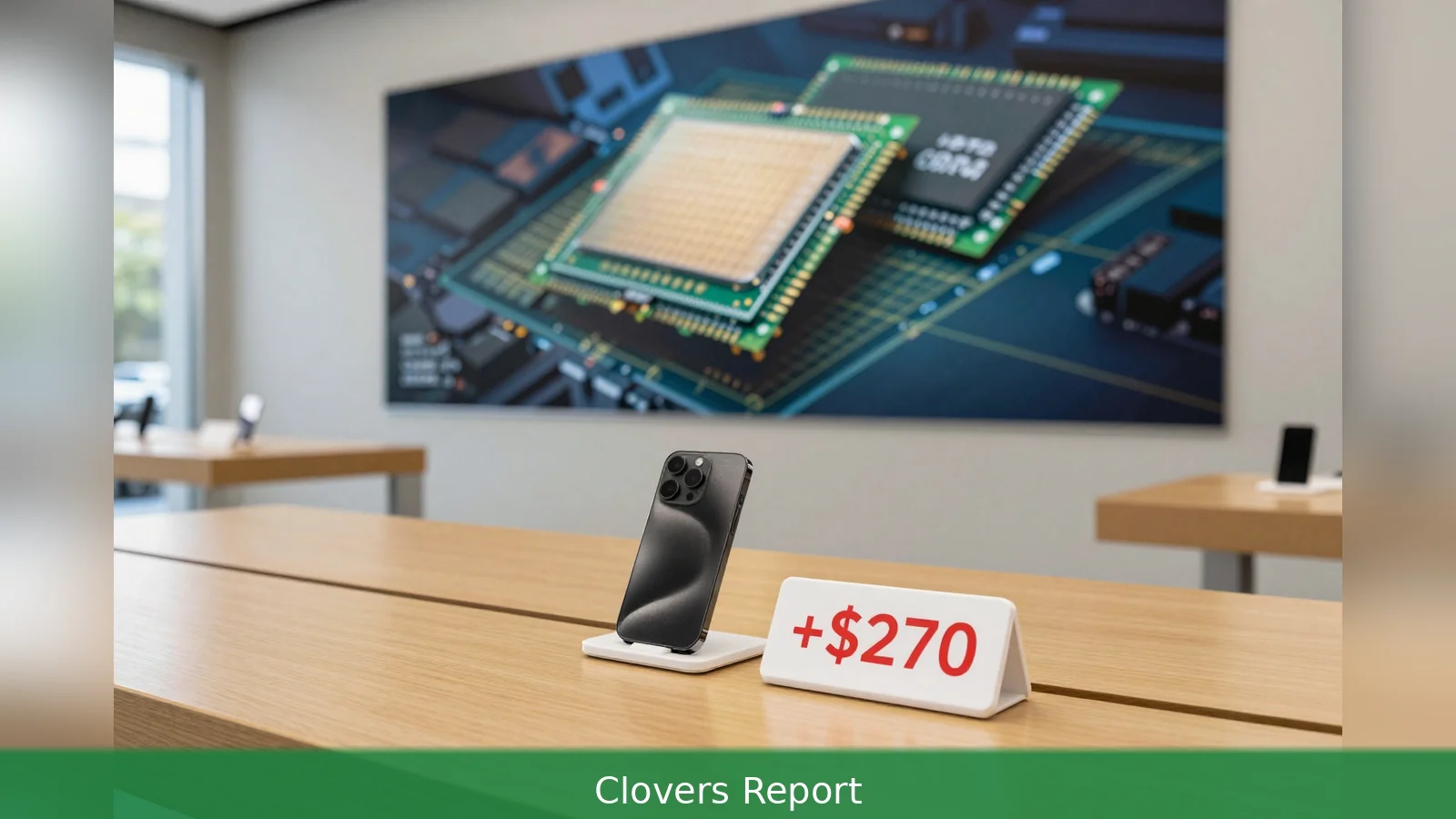
Apple may need to add roughly $270 to the price of the next iPhone Pro, according to TechInsights cited by The Wall Street Journal, as AI-driven demand for DRAM and NAND has pushed memory and storage costs sharply higher. "Price increases are unavoidable," Tim Cook told the paper, saying Apple has tried to absorb the rise but can no longer shield customers. Apple also confirmed iOS 27 will run back to the iPhone 11, while the headline Siri AI features are reserved for iPhone 15 Pro and newer, a split that could dent resale values for older models. Any price or configuration changes are likely to surface at the company’s September iPhone refresh, as John Ternus prepares to take over as CEO that month.
"We definitely need memory pricing and supply to return to reasonable levels for consumer products," Tim Cook said, underlining the supply-side squeeze company executives have repeatedly flagged. Apple has absorbed rising bill of materials until now, but Cook acknowledged the gap between component costs and retail tags has widened to the point the firm can no longer carry it alone.
Apple and industry analysts point to a single, clear driver: a global surge in demand for DRAM and NAND chips as AI server builds accelerate. That growth in data-centre buying has pushed memory prices higher, and supply disruptions have raised the cost of semiconductor production. Inflation across chip manufacturing has layered on those pressures.
Those forces are already finding their way into Apple products. Research firm TechInsights told The Wall Street Journal that Apple would need to add roughly $270 to the next iPhone Pro to preserve its current margin structure. For context, a $270 uplift would be a material step up the price ladder. Apple has started to test alternatives to a straight price rise: earlier this year the company removed lower-capacity Mac Mini configurations, an example of SKU rationalisation that effectively raised the entry price for that model.
Executives have signalled three broad responses are on the table. First, Apple can accept lower margins on devices. Second, it can nudge buyers to higher-spec models by cutting lower-capacity storage tiers. Third, it can raise retail prices. Company actions to date suggest all three are being considered, and the September iPhone cycle offers a natural moment to put in place any combination of those changes.

Split software support and the secondary market hit
Apple confirmed iOS 27 will run on many older iPhones, stretching back to the iPhone 11, which preserves basic software support for many users. But the most talked-about Siri AI features require an iPhone 15 Pro or newer, leaving owners of base iPhone 15 models and older phones without the headline on-device AI tools.
That kind of feature gating has real secondhand consequences.
SellCell chief operating officer Sarah McConomy told Forbes that when past iPhones lost software support average resale values fell by 3.4 percent in the three months after a major update and by 6.6 percent over six months. Applied to devices excluded from on-device AI, McConomy warns similar, if measured, depreciation pressure is possible. The result is a twofold cost calculus for buyers: any higher new-device tag to offset chip costs, and weaker trade-in or resale value for models that don't receive full AI functionality.
For Apple the operational choice is as much about product design as it's about pricing. Removing low-capacity SKUs pushes more buyers into pricier configurations without changing the headline model name. Taking margin means absorbing profit pain on every unit sold. Raising the listed price is the bluntest option, and the one that most directly passes the industry-wide memory bill to consumers.
Who makes the call will partly be a question of timing. The company plans its next iPhone refresh for September, a regular cadence that also offers a cover for price and configuration changes. Incoming CEO John Ternus will inherit that strategic palette of choices when he takes over in September.
For buyers and the broader handset market the mix of higher manufacturing costs, feature gating and possible price rises makes the usual buying calculus. Prospective purchasers have to weigh not only what a phone does today, but what features it will receive over its useful life and how that will affect trade-in or resale value. For Apple the same factors shape product planning, positioning and the timing of any price adjustments.
Related Articles
- Opendoor cuts 250 jobs in India as AI reshapes outsourcing
- Opus 4.8 wins honesty gains but flunks one legal test
- Two ways to stop your Android keyboard tracking
Expect any price or configuration changes to be announced at Apple’s September iPhone refresh, the same month John Ternus takes over as CEO.
This article was created with AI assistance.


