
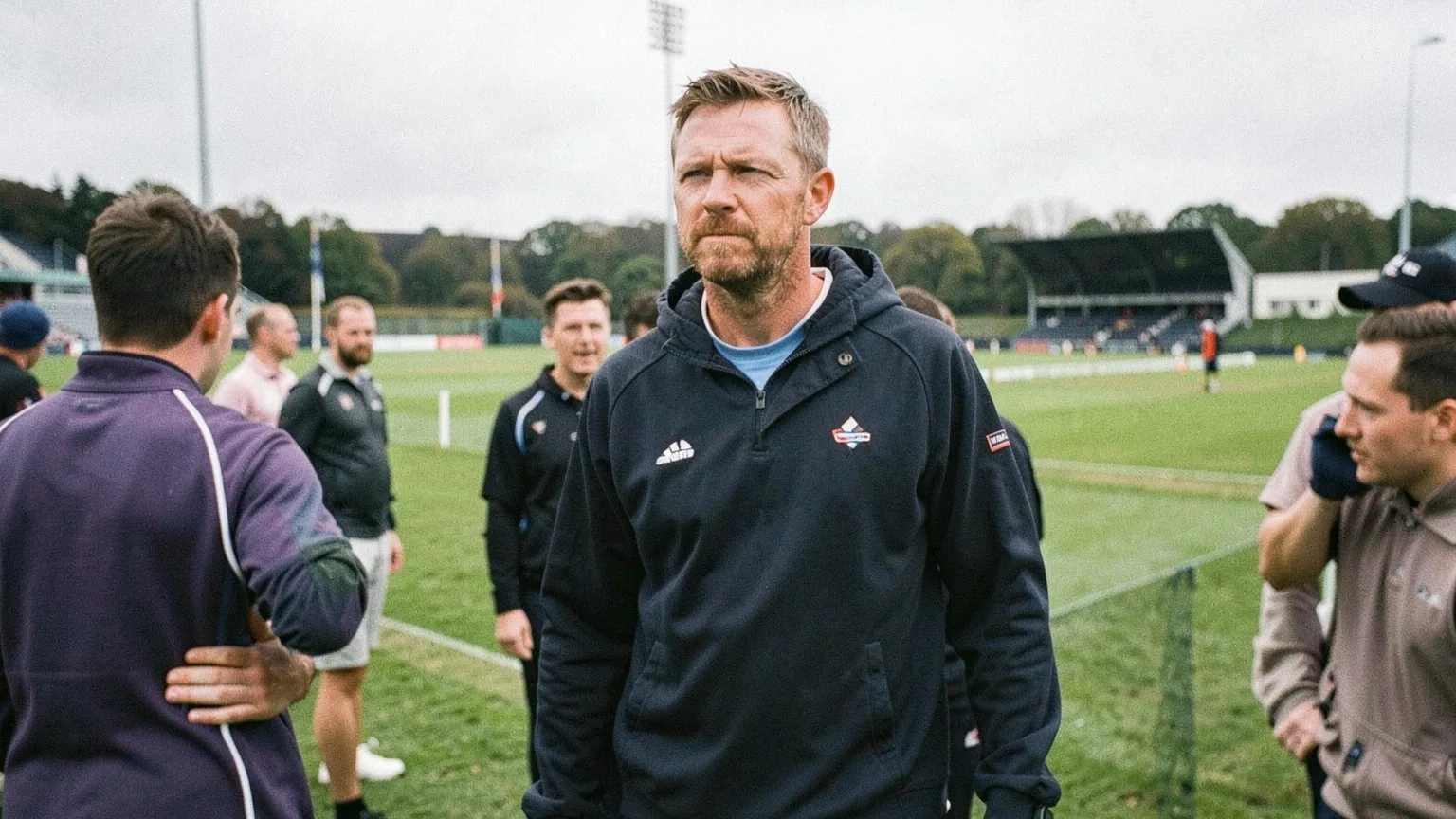
Kevin Pietersen has been appointed specialist mentor to England's men's white-ball teams for 12 months as the side finalises preparations for the 2027 ICC Cricket World Cup.
Kevin Pietersen is set to rejoin the England cricket setup as a specialist mentor for the next 12 months, bringing his elite batting expertise back ahead of the 2027 World Cup. "I've got immense respect for KP and what he's achieved in the game," said England white-ball head coach Brendon McCullum.
The ECB has named Kevin Pietersen, 46, as a specialist mentor to the men's white-ball setup for 12 months, a clear move to add elite batting expertise as England build towards the 2027 World Cup in southern Africa. Pietersen will don the England shirt for the first time since 2014.
He scored 4,440 ODI runs at an average of 40.73 in his international career and will begin the role with the forthcoming T20 and one-day series against Sri Lanka. He will also travel with the squad to Australia and South Africa this winter, rejoin for home series against Pakistan and New Zealand, and remain with the side through the tournament in South Africa, Zimbabwe and Namibia.
What Happened
Pietersen will not be with England for their ODI tri-series in Pakistan in October, but he arrives with recent high-level mentoring experience.
He worked as a mentor to the Delhi Capitals during the 2025 Indian Premier League and briefly assisted England’s batters during an ODI series in South Africa in 2023.
Pietersen made his England debut in November 2004. He is an ICC Hall of Famer, with 1,176 T20I runs at an average of 37.93, a strike rate of 141.51, and nine ODI centuries.
The ECB framed the appointment as a targeted short-term boost for the England white-ball set-up.

The Context
England's move is as much about message as method. Pietersen's appointment signals that the board wants high-grade, hands-on batting input without disrupting the coaching structure around Brendon McCullum. That is politically significant because Pietersen publicly criticised what he called a relaxed training culture under McCullum during England's India tour in early 2025, a claim McCullum rejected as "factually incorrect".
Since retiring from professional cricket, Pietersen has maintained a loud public profile, working largely as a broadcaster and remaining outspoken on England's approach. He has also taken short-term mentorship roles in high-pressure franchise environments, which is why selectors will expect practical, immediately applicable work rather than a long-term rebuild.
For a concise record of his playing credentials, see Pietersen's ICC profile (https://www.icc-cricket.com/tournaments/icc-cricket-world-cup-2027/news/england-appoint-icc-hall-of-famer-as-specialist-mentor).
The immediate question for selectors is simple. How quickly will his methods land in the dressing room, and will they change England's tempo with the bat when it matters most.
Reaction
Reaction was immediate and mixed. Some pundits celebrated the raw batting nous Pietersen brings, while others warned his re-entry carries baggage that could complicate dressing-room cohesion.
Many commentators recalled the 2012 "Textgate" scandal, which ended his previous England career, and framed his return as a dramatic personal comeback. (https://sports.ndtv.com/cricket/kevin-pietersen-to-put-on-england-jersey-1st-time-in-12-years-given-important-role-before-world-cup-2027-12013718)
Critics pointed to his habit of public commentary and past spats with figures inside the setup as reasons for caution, arguing that strong personalities can either sharpen standards or deepen faultlines. Supporters countered that short, targeted mentorships are precisely the kind of pragmatic intervention England need to sharpen their limited-overs batting.
The practical test, for players and management alike, will be whether Pietersen’s methods are absorbed quickly and without distracting the squad. Attention will fall on early sessions and intra-squad interactions rather than headlines.
What's Next
The immediate test is practical. England need to show that brief, high-level mentoring converts into clearer run-scoring and steadier middle-order performances before the World Cup cycle hardens.
Concrete things to watch
- Changes in the top three's approach in the powerplay and first 30 overs, measured by strike rate and the proportion of innings that pass 50.
- The conversion rate from starts into 50s and hundreds across the batting order, and whether more innings reach match-defining totals.
- T20 middle-order strike rates and the frequency of late-innings acceleration that wins close games.
- Selection signals: whether players known for attacking intent see more backing, and whether new or fringe batters earn sustained runs under pressure.
Selectors and coaches will treat early sessions as diagnostic. They will be watching how quickly techniques are adopted, how intra-squad practice translates into match day choices, and whether any short-term gains persist into the heavier tour schedule.
The governing question is institutional: will a 12-month specialist role become a model the ECB repeats, or will it stay an episodic intervention for crunch cycles. That decision will hinge on measurable gains and on whether the dressing-room absorbs the input without distraction.
England's next concrete moments to judge progress are only weeks and months away. The single most resonant fact to end on is simple and human, Kevin Pietersen, 46.
Originally reported by BBC Sport.
This article was created with AI assistance.


