
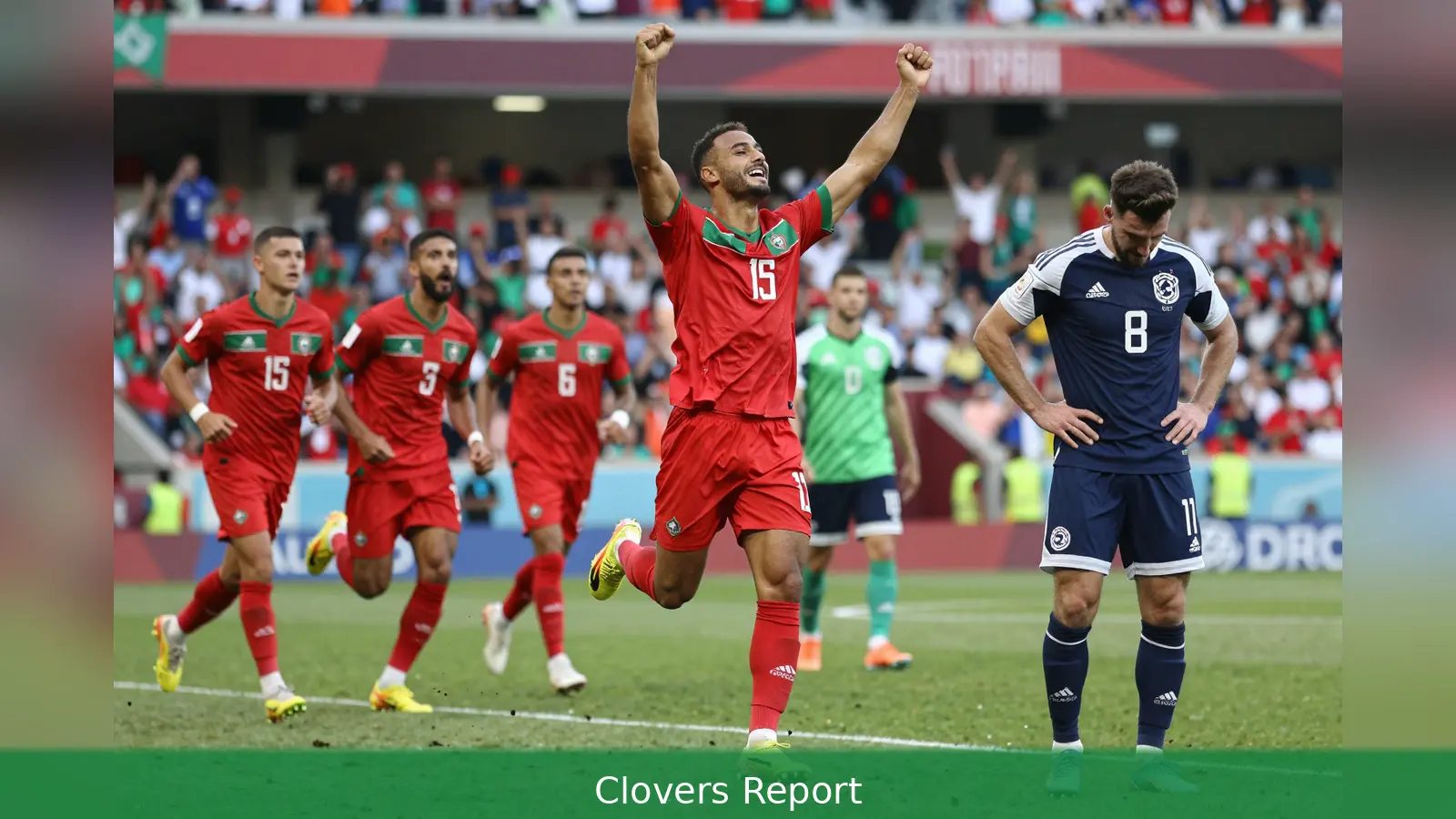
Scotland must take something from their match with Brazil to keep control of their World Cup fate, after Morocco beat them 1-0 in Boston. The decisive moment came inside the opening 70 seconds when Ismael Saibari finished from a lofted pass by Brahim Diaz, a strike that left Morocco on four points and Scotland on three. A late penalty appeal for Scotland, after a tackle on Scott McTominay, was not awarded following on-field review, a decision that fuelled debate among pundits. With one group match remaining against Brazil, Scotland face a simple arithmetic truth: win or draw to retain the clearest path, lose and they must hope to be one of the best third-placed teams.
Scotland's route through Group C has narrowed because Morocco's 1-0 win in Boston left the Scots needing a positive result against Brazil to keep the most straightforward path to the last 32. Morocco took the lead in the very first minute when Ismael Saibari met a lofted pass from Brahim Diaz, and the early strike set the tone for a game in which Morocco managed tempo and defended their advantage. Angus Gunn made several saves for Scotland as the visitors pressed, but they couldn't fashion a clear equaliser and the match finished 1-0 in Morocco's favour.
1. How the match unfolded in Boston
The opening goal was the pivotal sequence. Saibari's finish, inside the opening 70 seconds, came from a long pass by Brahim Diaz which split Scotland's defence. Following the goal, Morocco adjusted to a game-management approach. They protected their lead with organised defending and selective pressing, while Scotland chased the game. The second half saw a markedly improved Scotland performance, with more possession and greater urgency. Managerial changes and substitutions, notably the introductions of Lyndon Dykes, Ben Gannon-Doak and Kenny McLean, helped create momentum, but none produced a decisive shot on target that changed the scoreline.
The match also featured a high-profile refereeing incident. Late in the second half Scotland appealed for a penalty after Neil El Aynaoui challenged Scott McTominay in the box; the referee did not award a spot kick and VAR did not overturn the decision. Commentators were sharply divided on the call. Lewis Ferguson told ITV that Scotland started badly, conceded a slack goal, then grew into the game and deserved at least a point, while admitting the squad were "gutted about the result." Those divided readings will feed into previews and affect how Scotland approach the Brazil match.
2. What the result means for Group C
The group table is compact and consequential. After two matches Morocco sit on four points, Brazil also have four following their 3-0 victory over Haiti, and Scotland lie on three points. Haiti have been eliminated from the group after the defeat to Brazil.
That combination of results puts Morocco in the strongest position to reach the last 32, because a win over Haiti in their final fixture would effectively secure a top-two finish.
Several outlets laid out the arithmetic plainly. 101greatgoals and the Guardian set out the remaining permutations, and both explained that Scotland must take something from the fixture with Brazil to remain in control of their destiny. If Scotland lose to Brazil, their route to the knockouts shifts to the uncertain territory of finishing as one of the eight best third-placed teams across the 12 groups. The reporting was careful to note that the precise contours of that route depend on the wider group-by-group picture and on FIFA's tiebreaker rules, which the match reports didn't reproduce in full.
For Morocco the path is simpler. Their remaining fixture against Haiti offers a clear opportunity to consolidate. A win would move Morocco closer to automatic qualification and leave Scotland and Brazil to contest the remaining places in the group. Coverage in the Guardian and the Independent even framed Morocco's position as the most comfortable in the pool, using language that described them as "nailed on" for the last 32, a reflection of the practical advantage that early points provide in a tight group.
3. How supporters should read the permutations
First, treat the Brazil match as the decisive tie for Scotland's most straightforward progress. A win for Scotland against Brazil would, in most scenarios described by reports, secure automatic qualification. A draw could still leave Scotland with options depending on goal difference and other results, but it would hand Brazil the initiative in the group and complicate Scotland's calculations.

Second, if Scotland lose to Brazil the pathway becomes comparative rather than self-contained. Scotland would then need to be among the best third-placed teams across all 12 groups. The match reports emphasised that this is an uncertain route because it depends on multiple external results and on relative goal difference or points tallies across groups. The accounts stopped short of listing FIFA's full tiebreaker matrix, and so exact thresholds and the combinations required to finish among the top eight third-placed teams were not specified in those reports.
Third, for Morocco the arithmetic is straightforward. A win over Haiti would put them in a position where automatic qualification is highly likely. That clarity is part of why Morocco's standing is framed as comfortable in contemporary coverage. For supporters planning their viewing or thinking about permutations, the priorities are therefore distinct: Scotland must focus everything on the Brazil match, while Morocco can approach Haiti as an opportunity to consolidate and, if necessary, rotate the squad while maintaining results.
4. The tactical and talking points that matter going into the final round
The opening 70 seconds will be the headline tactical moment from Boston. Morocco's early strike allowed them to dictate tempo and convert the match into a contest over possession management and defensive organisation. That's an important signal for Brazil's preparation too, because Morocco showed they're capable of getting ahead quickly and then relying on structure rather than frantic defending.
Scotland's second half mattered for how the team will approach the Brazil match. The Scots produced a far better period after half time, with the substitutions generating momentum and increased possession. Yet the team failed to fashion a clear equaliser. That imbalance between control and a lack of decisive finishing will be a central theme in previews of the Brazil game, and a focus for Scotland's coaching staff ahead of selection and training for the next fixture.
The refereeing incident also has consequences beyond this single result. The referee's decision not to award a penalty, and VAR's choice not to intervene, will be cited in future debates about officiating consistency and the interpretation of contact in the box. This split among commentators ensures this moment will figure in conversation about how VAR is applied. Those discussions can influence referee training, public expectations and how managers coach players to react in the box.
For readers and supporters preparing for the last round of fixtures, the essential facts to carry forward are the current points totals and the identities of the final opponents. Scotland play Brazil and Morocco face Haiti. Monitor those two matches closely; they will finalise the top two in Group C and decide which team, if any, is left to rely on finishing as one of the better third-placed teams.
If you are following permutations, do this in order. First, check Scotland's match with Brazil. If Scotland win, the need to worry about cross-group comparisons disappears. Second, if Scotland draw, the situation becomes dependent on goal difference and the outcome of Morocco v Haiti. Third, if Scotland lose, prepare to track many other groups to see whether their points and goal difference are enough to finish as one of the top eight third-placed teams. The match reports pointed readers to FIFA's tournament regulations for the exact tiebreaker rules, and that remains the authoritative source for anyone wanting a full checklist.
For travelling supporters or those making viewing plans, the immediate action is simple. Confirm the official match schedule and kick off times from FIFA or the relevant broadcasters, and be ready to follow Brazil and Haiti's fixtures as the wider context for Scotland's route. The reporting also suggests that narrative matters. If Scotland recover a result against Brazil, the story will be one of resilience. If they lose, their fate will rest on the complicated arithmetic that decides the best third-placed teams.
Finally, for anyone setting their expectations: Morocco have the clearer path and, with a positive result against Haiti, are likely to be among the top two teams in Group C. Scotland retain a clear, if narrower, route to the last 32, but only if they take something from Brazil.
Worked scenario: Imagine Scotland draw with Brazil. That result would leave Scotland on four points, level with Morocco and Brazil depending on Morocco's result, and the group would then be decided on goal difference and head to head ties. Because the press accounts didn't reproduce FIFA's full rulebook, the next step for anyone wanting a definitive checklist is to consult the tournament regulations. The reporting grouped the permutations into the simple headline routes rather than trying to list every cross-group combination.
What pundits will stress: expect pre-match media to return to three themes. One, the need for Scotland to start well and avoid conceding early, given the damage a quick goal did in Boston. Two, whether Scotland can convert second-half control into clear chances and goals. Three, the referee and VAR story lines, with the McTominay challenge serving as a recent example of how marginal calls can change a match.
Related Articles
- AI Advantage: 8 steps to scale without hiring
- Master GitHub workflow with 13 CPD hours of practice
- 5 steps to choose a domain and hosting bundle
Scotland now face Brazil and Morocco play Haiti. For Scotland the simplest route is clear: win or draw against Brazil to keep automatic qualification in their own hands; a defeat would force them to hope for a place among the tournament's best third-placed teams, while Morocco can consolidate their position with a win over Haiti.
This article was created with AI assistance.


