
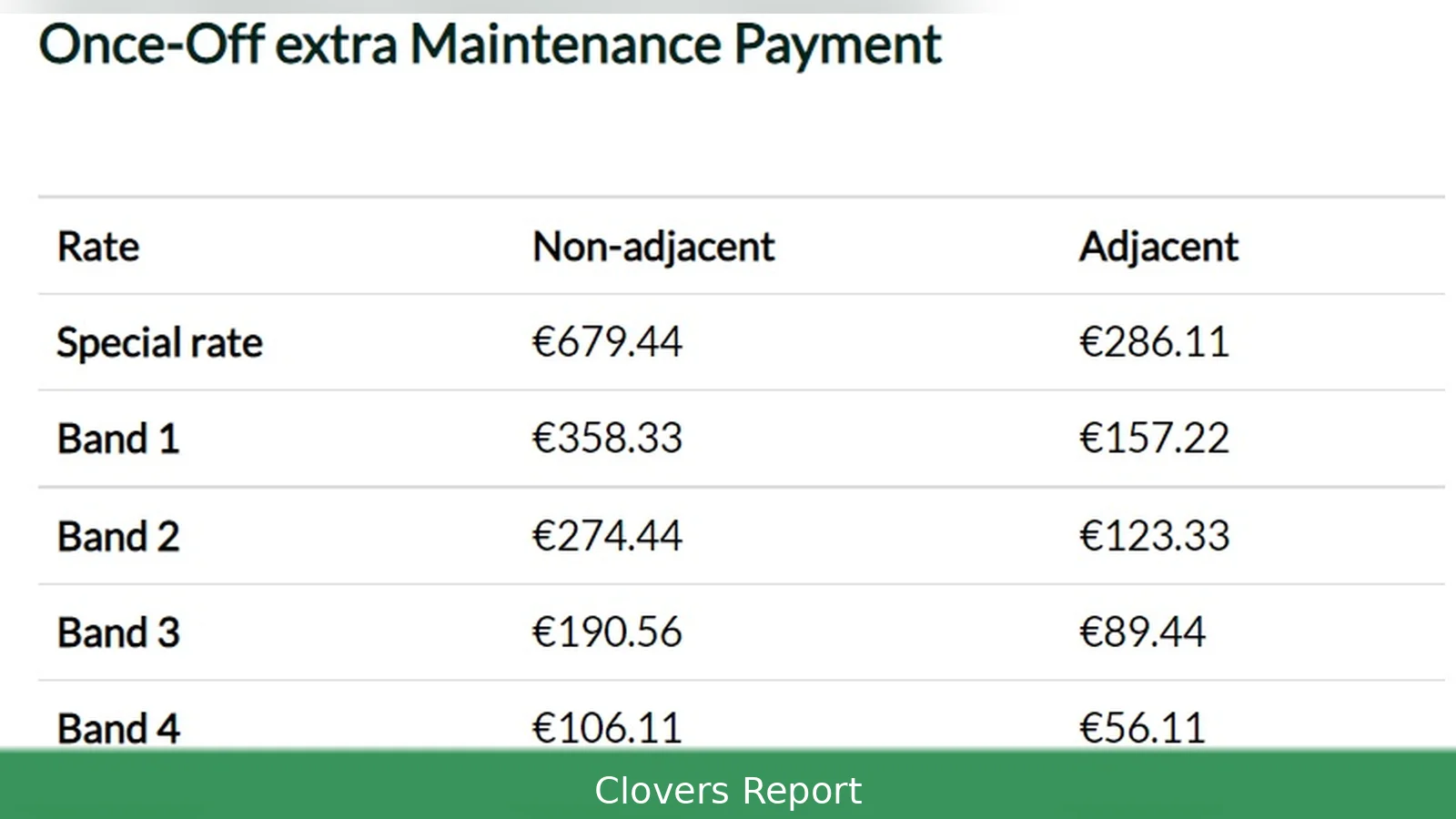
Here's a quick summary: SUSI gives means-tested grants for approved full-time and part-time courses in Ireland, and also for some eligible study in the UK and EU. Key 2026 figures: student contribution charge €2,500; special rate income threshold €28,600; income threshold for the €500 student contribution grant €120,000; postgraduate free contribution grant €4,500; term-time earnings disregard €8,830. Apply online at https://www.susi.ie or check gov.ie for scheme details.
What the SUSI grant covers
SUSI (Student Universal Support Ireland) is the national awarding authority for higher and further education grant support. It helps with the student contribution (college fee), maintenance (living costs) and extra supports for certain students. The scheme covers full-time undergraduate and postgraduate courses in approved Irish institutions, certain PLC courses, and in limited cases study in the UK or EU.
Prerequisites: eligibility basics
Before applying, check that you meet these basic rules. They’re clear but firm.
1. Nationality/immigration: You must be an Irish, EU, EEA, UK or Swiss national, or hold a specified immigration status or leave to remain permission from the Department of Justice.
2. Residence: You must have been resident in the Irish State, the EU, EEA, UK or Switzerland for three of the last five years.
3. Course approval: You must be attending an approved course in an approved institution. The course should lead to a higher level of qualification than any you already hold, and you must be progressing rather than repeating, except in exceptional circumstances.
4. Reckonable household income: Your household’s total reckonable income must fall below SUSI’s income thresholds. Different rates apply depending on family circumstances and whether you’re living at home, away from home, or independently.
Key 2026 figures and thresholds
Budget 2026 brought a number of changes. The main figures to note for 2026 are:
- Student contribution charge (annual): €2,500.
- Income threshold for the €500 student contribution grant (undergraduate): €120,000.
- Special rate income threshold (maximum grant): €28,600.
- Postgraduate free contribution grant: €4,500 (an increase of €500 in 2026).
- Income disregard for student earnings outside term time: €8,830 (up from €8,424).
Non‑adjacent maintenance rates for students living 30km or more from their college were also increased for 2026. Exact maintenance amounts vary by student category (at home, away from home, and rent/misc costs) and household income — check the SUSI rate tables at https://www.susi.ie or the gov.ie student grant pages for detailed brackets.
Step-by-step: how to check SUSI grant eligibility and apply
To check if you qualify and apply, follow these steps. Most of it’s online and works the same whether you’re new or renewing.
Thing is, step 1 — Check basic eligibility online
1. Go to the SUSI Eligibility Indicator at https://www.susi.ie/eligibility or the gov.ie Student Universal Support page. The online indicator asks a short set of questions on nationality, residency, course level and household income ranges. It’ll tell you whether you should make a full application.
Step 2 — Gather documents
2. Collect proof of identity (PPS number, passport or GNIB card), proof of address, and evidence of reckonable household income for the relevant tax year (P60, payslips, CAO grant statements, self-employment accounts, or proof of social welfare payments). If parents live apart, you may need documentation for both households. If you’re a dependent student, SUSI assesses household income — not just your own.
Step 3 — Create or sign into your SUSI account

3. Create an account at https://www.susi.ie or sign into an existing account. Renewals are faster if your details haven’t changed; still check income thresholds every year — the rules and rates changed in 2026.
Step 4 — Complete the application form online
4. Complete the online grant application. Choose the correct academic year (for example, 2026/27). Provide your course and institution details, household income, and upload the supporting documents. Answer the progression questions truthfully — SUSI checks that you’re progressing to a higher level than prior qualifications.
Step 5 — Submit and pay any application fee (if applicable)
5. There’s no fee to submit a SUSI grant application. But you’ll still be charged the student contribution by colleges unless SUSI confirms that payment is covered by grant. Keep proof of application — some colleges let you defer payment until grant decisions are final.
Step 6 — Track your application
6. SUSI processes applications and may contact you for extra information. Processing times vary — apply early. You can track progress in your SUSI account and will get official correspondence by email or post.
How reckonable household income works
Reckonable household income means your household’s gross income from the latest tax year, after some allowed deductions. It includes salaries, benefits, pensions and some other income. SUSI publishes detailed lists of reckonable and non‑reckonable income on its website. If a parent or spouse is self-employed, provide accounts and a Revenue statement of income. If household income is volatile, SUSI can look at the most recent tax year or make allowances — but you must supply documentation.
Special categories and exceptions
There are specific rules for mature students, postgraduate students, students with disabilities, and part-time students. Postgraduate students are eligible for a Postgraduate Free Contribution grant of up to €4,500 in 2026 — this covers the student contribution rather than maintenance. Students with disability may get extra allowances for transport or special needs. Part-time grants exist for eligible courses — see the part-time scheme on SUSI’s site.
Tips to improve your application
1. Apply early — SUSI opens for new and renewal applications ahead of each academic year; apply as soon as the portal opens for the year you’re starting. Deadlines vary for some courses and travel-related grants.
2. Upload clear documents — blurry payslips or scanned PDFs with missing pages slow processing.
3. Keep copies of all correspondence — reference numbers, emails and decisions can help if anything goes wrong.
4. If parents separate, provide a separation letter or court order. SUSI may need proof of the date they parted company to decide which household count applies.
5. If you work during term-time or holidays, declare earnings. For 2026 SUSI allows an earnings disregard of €8,830 for student term-time/holiday work — still report income above that.
Common mistakes to avoid
1. Missing residency evidence — students often underestimate the three-of-five-year rule. Have dated proof of residency ready.
2. Uploading the wrong tax year — use the tax year SUSI asks for. Using an earlier year can change the income band and delay the award.
3. Assuming automatic renewal — you must submit a renewal application each year unless SUSI notifies you otherwise.
4. Forgetting to declare parental income — dependent students must include parents’ incomes; not doing so can lead to refusal or repayment demands later.
5. Relying on verbal promises — only formal SUSI decisions matter. If a college staff member gives advice, confirm it with SUSI documentation.
Alternatives and comparisons
If you don’t qualify for SUSI, there are other supports to consider:
- College hardship funds: Many institutions run discretionary hardship funds for students facing financial difficulty — check the student support office at your college.
- Student loans and credit unions: Not ideal for undergraduates, but an option for mature or postgraduate students.
- Scholarships and bursaries: Colleges, private organisations and charities offer targeted awards based on merit or need.
- Back-to-Education Allowance and other Department of Social Protection schemes: For specific groups returning to education.
Compare SUSI to college-specific supports — SUSI is a national, means-tested award with defined rate tables; local hardship funds can be faster and more flexible for immediate need.
Related Articles
For 2026, SUSI remains the primary route for means-tested maintenance and fee support in Ireland. Check the online Eligibility Indicator at https://www.susi.ie/eligibility, gather proof of identity and household income, and apply early for the academic year you intend to start. Key 2026 figures to remember: student contribution €2,500; special rate threshold €28,600; €500 student contribution grant threshold €120,000; postgraduate free contribution €4,500; earnings disregard €8,830. The SUSI website and gov.ie student grant pages carry the official rate tables and application portal.
This article was created with AI assistance.


