
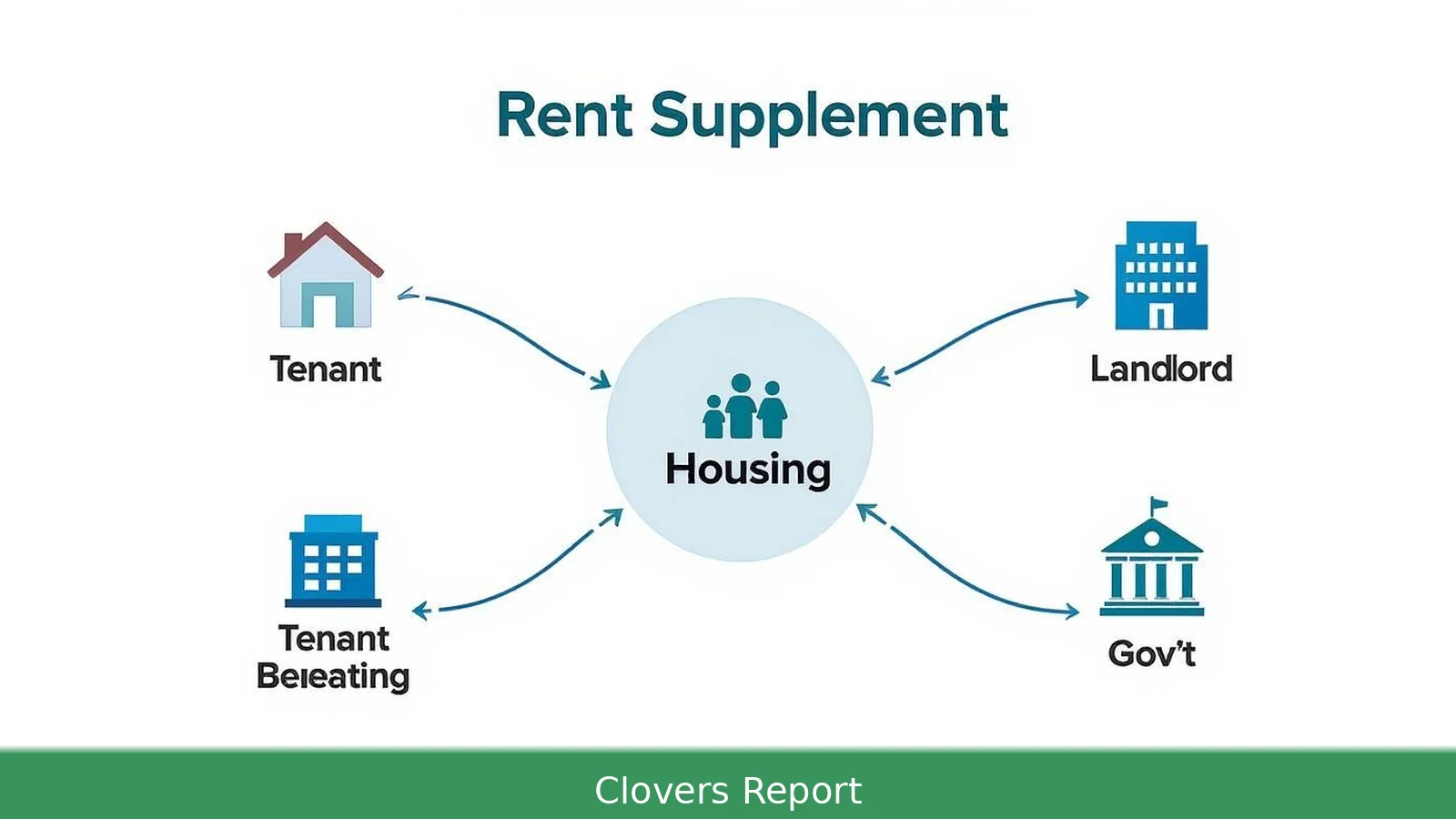
Rent Supplement gives short-term help so low-income people can keep their rented home while they stabilise their finances. The payment is means-tested and capped by weekly maximums set by the authorities; it's intended as temporary help in emergencies or during transitions. You apply through your local council or on MyWelfare (gov.ie) — bring ID, your PPSN, evidence of income and your tenancy documents.
Quick reference
- Who qualifies: people in private rented accommodation who meet the Habitual Residence Condition (HRC), are means-tested and need short-term help.
- How much: Rent Supplement is paid weekly, up to published maximum rates by area. Caps vary widely by area — for example, one‑bed maximums are higher in central Dublin and much lower in rural counties. Typical 2‑bed maximums in 2026 are: Dublin city €430, Dublin suburbs €360, Cork €320, Galway €300, Limerick €270, rural counties €180. Typical 3‑bed maximums are: Dublin city €520, Dublin suburbs €420, Cork €380, Galway €360, Limerick €330, rural counties €220. Local authority maximums can vary — check your council's published table.
- How to apply: contact your local authority housing office or apply via MyWelfare at https://www.gov.ie/en/service/rent-supplement/ and submit proof of identity, PPSN, income, bank statements, rent and tenancy documents, and landlord contact details. There's no application fee.
Introduction
Rent Supplement is a short-term social welfare payment for people renting privately who can’t meet their rent from their own income. It's meant to stop someone from becoming homeless while longer-term options are put in place — for example, a transfer to the Housing Assistance Payment (HAP), social housing allocation, or receipt of an ongoing social welfare payment such as Jobseeker's Allowance or Disability Allowance.

The authority calculates weekly payments by working out what you need for rent and subtracting what you can reasonably pay yourself. But this support isn't permanent. Local authorities and the Department of Social Protection expect claimants to be actively looking for a longer-term solution and to keep the authority updated about changes in income or circumstances.
Prerequisites — who can apply
To qualify for Rent Supplement in 2026 applicants normally must meet all of the following:
- Be living in private rented accommodation with a formal tenancy agreement, written receipt or rent book showing the landlord’s name and address.
- Be habitually resident in Ireland and satisfy the Habitual Residence Condition (HRC). The HRC is assessed on your pattern of residence, employment history, family ties, and intentions to stay; there's no fixed number of months that guarantees qualification.
- Be aged 18 or over. Younger people may qualify in specific circumstances (for example, those who are lone parents or leaving state care).
- Have income and savings below the Department of Social Protection means-test thresholds. Income from work, social welfare, maintenance and other sources is considered; some small earnings may be disregarded under the income rules.
- Be unable to meet the rent from earnings or existing social welfare payments without falling into hardship or homelessness.
Also, you generally can't get Rent Supplement if you already have HAP, hold a council tenancy or are in approved homeless accommodation. If you are in emergency accommodation, the local authority and homeless services will advise the best route.
Step-by-step: How to apply (practical guide)
Follow these steps to make a clean, fast application and reduce delays.
- Check eligibility. Confirm you meet the Habitual Residence Condition and are in private rented housing. Use the online Rent Supplement guidance at https://www.gov.ie/en/service/rent-supplement/ and phone your local authority housing office for clarification.
- Gather documentation. Bring original documents and copies: passport or driving licence for ID, PPSN card or letter, proof of address (tenancy agreement or rent book), landlord contact details and bank details, recent rent receipts, last 6 weeks of bank statements, last 6 weeks payslips (if employed), social welfare letters, proof of any other income and a statement of savings. If you're self-employed, supply three months of business bank statements and relevant accounts.
- Make the application. Apply in person at your local authority housing office or online via MyWelfare (https://www.mywelfare.ie). If applying in person, ask for a receipt of the application and a copy of any forms completed. If you apply online, upload clear scans or photos of each document.
- Complete the means test. The local authority assesses income, allowable expenses and any disregards. They'll work out how much rent you can reasonably be expected to pay. The authority will then compare that to local maximum rates to calculate the weekly Rent Supplement payment.
- Receive decision and payment set-up. Decisions can take several weeks — many people hear back within about a month, but it depends on the local authority. Payments are made weekly and can be paid to you or, in specific circumstances, to your landlord. Provide bank details for the designated recipient. Backdating may be considered for a limited period from the date you became unable to pay rent.
- Keep copies of your paperwork and expect regular reviews of your claim. Rent Supplement is reviewed regularly. Notify changes in income, household composition, tenancy or address. Reviews are often monthly or quarterly depending on circumstances. Failure to report changes can lead to overpayments and recovery actions.
How long it lasts and extensions
Honestly, rent Supplement is intended as short-term support. Initial awards are commonly granted for a fixed period (for example, several weeks or months) and can be extended where a claimant remains eligible and is actively seeking a longer-term solution. Extensions depend on local authority policy and the claimant's circumstances. If longer-term help is needed, the local authority will explore HAP, social housing lists or other supports.
Tips to speed up your claim
- Submit a complete application the first time: missing ID, unsigned tenancy agreements or unclear bank statements are the commonest causes of delay.
- Use MyWelfare to upload documents — it's quicker than posting paperwork, and it timestamps your application.
- Get a written rent receipt or rent book entry from your landlord that shows the weekly rent and landlord contact details.
- Contact Citizens Information (https://www.citizensinformation.ie) and Threshold (https://www.threshold.ie) for free, independent advice on landlord issues, tenancy rights and negotiation on rent levels.
- If you’re threatened with eviction, go to your local authority housing office and your local Citizens Information Centre straight away. Emergency interventions may be possible.
Common mistakes to avoid
- Not proving habitual residence: don't assume residency is automatic. Provide the necessary history of employment, education or family ties if requested.
- Incomplete income evidence: hand in all payslips, welfare letters and bank statements requested — partial evidence often means delayed decisions or reduced awards.
- Unsigned or informal tenancy agreements: only formal written tenancies or rent books are usually accepted. Get your landlord to sign a document if needed.
- Failing to report changes: if earnings rise, a new partner moves in, or the tenancy ends, tell the local authority immediately to avoid overpayment recovery.
- Assuming the payment covers utilities or other charges: Rent Supplement covers rent only. You remain responsible for bills unless other supports are in place.
Where to get help and official contacts
Key contacts and online resources:
- Department of Social Protection — Rent Supplement service page: https://www.gov.ie/en/service/rent-supplement/
- MyWelfare (online claims and uploads): https://www.mywelfare.ie
- Citizens Information — advice and local centres: https://www.citizensinformation.ie
- Threshold — housing advice and tenancy rights: https://www.threshold.ie
- Money Advice and Budgeting Service (MABS) — budgeting help: https://www.mabs.ie
- Your local authority housing office — find contact details on your county or city council website for in-person applications and local maximum rate tables.
Appeals and reviews
If a Rent Supplement application is refused or a decision is reduced, you can request an internal review with the local authority in the first instance. If you're still dissatisfied you may appeal to the independent Social Welfare Appeals Office (SWAO) for decisions involving social welfare. Keep copies of all correspondence and meeting notes. There are time limits for appeals, so act quickly if you disagree with a decision.
Rent Supplement is a practical, short-term lifeline for people in private rented homes who meet the Habitual Residence Condition and a means test. It's not a permanent housing solution, so apply promptly, keep paperwork organised and stay in touch with your local authority about extensions or movement to HAP or social housing. For forms, local maximum rates and online claims see https://www.gov.ie/en/service/rent-supplement/ and contact your local authority housing office if you're at risk of losing your home.
This article was created with AI assistance.


