
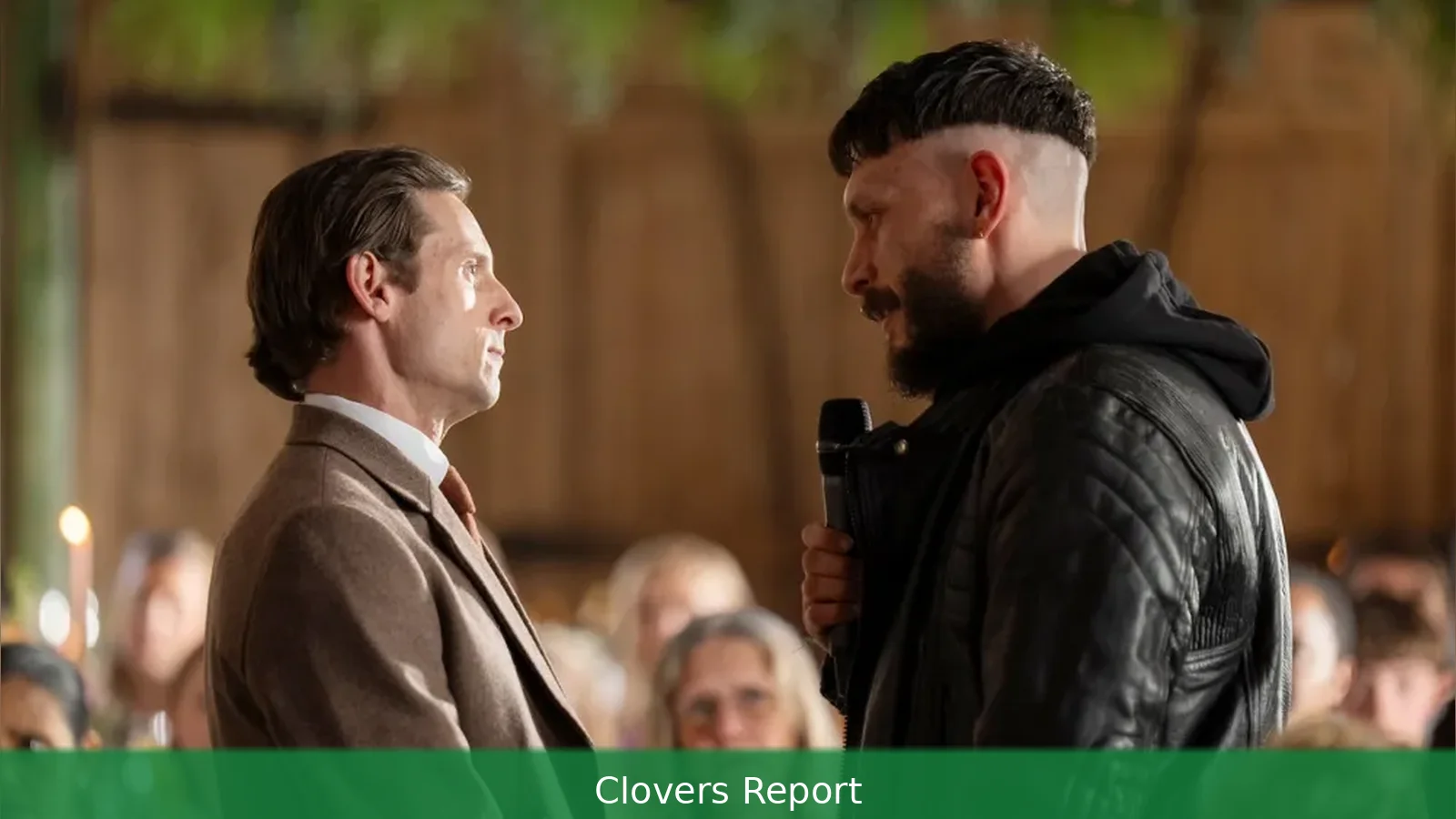
Half Man is a powerful but divisive six-part series that deliberately stages graphic sexual violence and coercion. An early episode, for example, dramatises Ruben arranging a woman to take Niall's virginity and coaching him through the encounter. Written by Richard Gadd, who also plays the adult Ruben, the BBC series follows their combustible relationship across three decades; Jamie Bell plays the adult Niall, with Mitchell Robertson and Stuart Campbell as the younger versions. If you are thinking of watching, expect explicit sexual content and scenes of coercion, and check the broadcaster for viewing advisories.
Reviewers have paired praise for Half Man's formal ambition with sharp discomfort at its depiction of sexual violence and coercion.
What the series shows
Half Man tracks Ruben and Niall from teenage years in 1980s Scotland into adulthood, using three-decade jumps to map how Ruben's swaggering, often violent alpha masculinity and Niall's bookish, closeted vulnerability entangle them. Richard Gadd wrote the scripts and plays the adult Ruben; Jamie Bell plays the adult Niall, Mitchell Robertson is the teenage Niall and Stuart Campbell appears as the younger Ruben. The Guardian framed this project as Gadd's first television work since Baby Reindeer, which it described as an Emmy-winning Netflix hit.
The series doesn't shy away from difficult material. Reporting lists scenes of chemsex in saunas, dogging in car parks and illicit encounters in library toilets. An early episode dramatizes Ruben procuring a woman to take Niall's virginity and remaining to coach him through the act. Variety noted the series hints at incestuous desire between the pair while presenting both men as at times deeply unlikeable and at other times oddly sympathetic.
Those choices have shaped critics' language. Variety described Half Man as intense and polarising, and called Richard Gadd "the master of uncomfortable viewing." HBO chief Casey Bloys summed the show's tone in a single word, calling it "intense." That intensity is both a selling point and a warning: the storytelling aims to disturb as much as to explain.

Production decisions and cast dynamics played a clear role in how the material reached screen. Richard Gadd didn't initially plan to play Ruben, but took the role after Jamie Bell encouraged him to, according to The Guardian. Bell has said the role of Niall was written with him in mind.
On set the creators and producers employed professional intimacy coordinators to manage the explicit material and to protect cast welfare.
Variety reports that one especially challenging episode required two intimacy coordinators, and that cast members were encouraged to check in with one another during filming. Julie Cullen, who plays Niall's college flatmate Joanna, told Variety the production "had a lot of people who were helping us through anything that we needed." Those precautions were visible but didn't remove public debate about the ethics of staging scenes of sexual violence and coercion for dramatic effect.
Jamie Bell told The Guardian he found the process of filming the explicit scenes different in strain from the long emotionally laden scenes. "Honestly, I was so grateful to be shooting that stuff and not fucking 16-page dialogue scenes, where you’re emoting and it’s so intense," he said. That comment underlines how actors and crew approached the material practically, even as critics and viewers argued about its moral and psychological cost.
Point is, commentary around Half Man has been as much about form as content. Reviewers have linked the series to Gadd's previous work, suggesting it's an escalation of his interest in masculinity, power and sexuality. That framing helps explain why some viewers find the show artistically compelling while others find it intolerable.
For viewers thinking about whether to watch, the practical considerations are straightforward. Expect explicit sexual content, scenes of coercion and material that aims to unsettle. Where you stream it depends on region: the series is a co-production between HBO and the BBC, so availability and any episode advisories will appear on those platforms.
Half Man makes a deliberate choice to test an audience's tolerance. It asks viewers to sit with discomfort, to follow two men whose relationship warps across decades, and to judge whether the storytelling justifies the means. That's why coverage has split between admiration for craft and unease about depiction.
Related Articles
- Three hosts, one Strictly first: Josh Widdicombe joins
- Bloom at Phoenix Park: how to avoid queues
- More than ten Carlow primary schools closed after threats
The six-episode run concluded in late May.
This article was created with AI assistance.


