
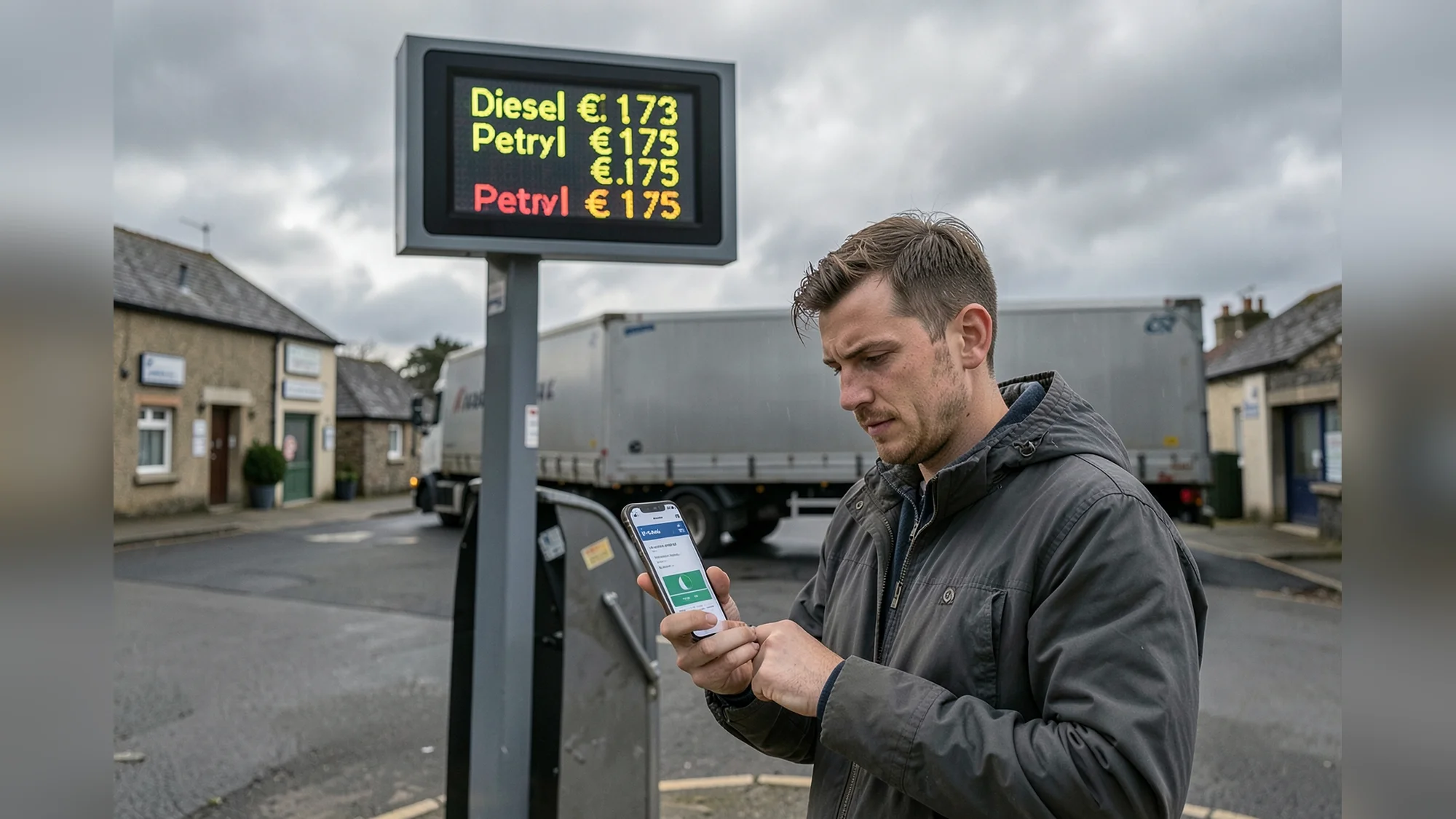
Motorists now pay an average of €1.73 a litre for diesel and €1.75 for petrol in July, a temporary easing after international oil prices spiked during two months of conflict in the Middle East earlier this year. AA Ireland published the July fuel averages on 13 July, showing diesel down 15 cent from June's €1.88 and petrol down nine cent from June's €1.84. The Government's April excise cut, €0.32 a litre on diesel and €0.27 on petrol, has kept many forecourts below the peaks seen earlier in 2024. Still, volatile crude markets and upcoming tax changes mean relief could be short lived.
The immediate effect is lower forecourt prices and softer heating bills for some households, a reversal caused by a combination of the excise cut and a recent easing in international crude prices.
Who feels the squeeze
Households face higher energy and heating costs even as pump prices eased in July. Home heating oil is a vivid example. A 1,000 litre delivery was under €1,000 at the end of February, nearly doubled to about €1,800 in April, and had eased back to roughly €1,300 by mid-July. That swing captures how exposed families are when global markets move.
Motorists see volatile prices at the forecourt. AA Ireland's July survey showed headline averages easing, but it also flagged changes that bite drivers and EV owners differently. Electric Ireland adjusted residential Night Boost tariffs and ESB ecars moved to a two-tier public charging structure from 1 July. Pay-as-you-go users on the faster, above-50kW tier faced increases of six to eight cent per kWh. AA Ireland estimated that those rises would add about €3.24 to €4.31 to a 77kWh ID.4 charge from 10 percent to 80 percent.
Businesses that rely on transport and fuel intensive supply chains are carrying higher input costs through the year. When diesel briefly traded above €2.30 a litre earlier in the period, margins and logistics budgets were hit directly; the April excise cut has softened that blow but not removed the underlying exposure to oil-price swings.

Price drivers and policy levers
International crude and geopolitical risk remain the dominant drivers of retail fuel and heating costs.
A separate analysis published on 19 July traced Brent crude from about $73 a barrel before US strikes on Iran at the end of February, to roughly $114 a barrel in May during two months of sustained conflict, then below $72 at the start of July and nearer $85 by mid-July. Those swings translated into forecourt pressure earlier in the year.
Domestic policy choices also matter. The Government cut excise duty in April by €0.32 a litre on diesel and €0.27 a litre on petrol, a temporary measure that has kept many pump prices below the peaks seen before the cut. The reductions are scheduled to remain in place through August and then to be unwound in four phases by the end of the year.
That timetable means forecourt prices will face an upward policy headwind from September.
The deferred carbon tax increase is another scheduled change. It was postponed from May and is now due to be implemented as part of October's budget. The planned rise would add €7.50 to the carbon tax, taking it to €71 per tonne of CO2 emitted. Estimates put the direct effect at about €17 on an average household gas bill, about €22 on a 1,000-litre fill of home heating oil, and roughly 90 cent on a 40kg bag of coal.
AA Ireland cautioned that the July fall in average pump prices will be welcome, but international market conditions, geopolitical uncertainty and currency fluctuations can quickly reverse that easing. The current reprieve therefore depends on both global oil developments and the domestic tax path set by the Government.
Related Articles
- Electric Ireland to raise electricity prices 8% and gas 7.7% from July 1, 2026
- €833 heating oil, market paralysis after Iran conflict
- Fuel costs top table as Taoiseach meets Merz
Two concrete dates will decide the next move: excise reductions remain in place through August and start to be unwound from 1 September, and the deferred carbon tax increase is set to take effect in October as part of the budget. Originally reported by RTÉ.
This article was created with AI assistance.


