
€500 and a €1,000 costs order were imposed after Quills Retail Ltd admitted selling hooded sweatshirts falsely labelled Made in Ireland. Judge David Waters at Killarney District Court recorded convictions on two counts on May 19, 2026, and said the labelling was a deliberate attempt to deceive buyers. The prosecution was brought by the Competition and Consumer Protection Commission following inspections in September and November 2024 after consumer complaints. The ruling threatens reputations and raises competitive questions for other Irish craft and knitwear retailers, the CCPC said.
The easy read is this. Small fines can carry big signals. A €500 penalty, paired with a €1,000 costs order, tells retailers that provenance claims aren't a soft area of enforcement.
What the court found
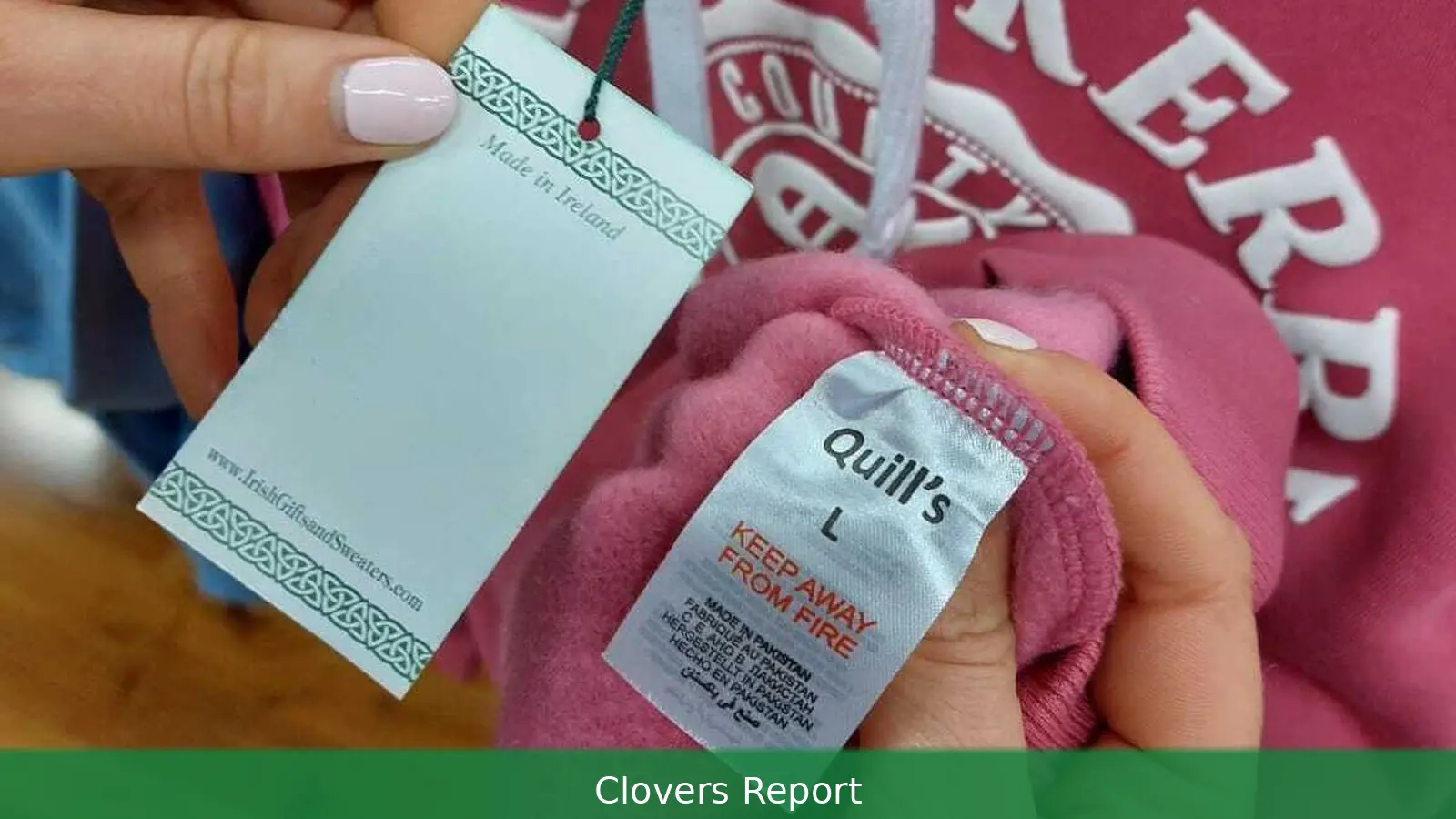
The CCPC prosecuted Quills Retail Ltd, trading as Quills Woollen Market, after consumers complained about branded hooded sweatshirts marketed as Made in Ireland. Authorised officers visited Quills stores in Killarney and Kenmare in September and November 2024. During those inspections they found Quills-branded swing labels stating Made in Ireland attached to hooded sweatshirts while the original care labels either showed Made in Pakistan or appeared to have been cut away. The garments included a Ring of Kerry, Ireland hooded sweatshirt and a Killarney, Ireland hooded sweatshirt.
Photographic evidence and officers’ testimony documenting both tampered and intact country-of-origin labels formed part of the prosecution file. Under the Consumer Protection Act 2007, it's an offence to provide false or misleading information about where a product was made. State solicitor Diane Reidy reminded the court that a class B penalty for that offence carries a maximum fine of up to €4,000 and/or up to six months’ imprisonment.
Quills pleaded guilty to two counts. Judge David Waters, handing down sentence at Killarney District Court on May 19, 2026, described the conduct as a "deliberate attempt to deceive buyers". He rejected a defence of mistake, finding the removal or cutting of original labels was not accidental. The judge recorded convictions on both counts and imposed the €500 fine together with an order that the company pay €1,000 towards the CCPC’s costs.
Wider harm and the company response
The case touches more than a single purchase. The CCPC said the ruling directly affects tourist customers who bought the branded hoodies and exposes competitive harms to other Irish craft and knitwear retailers.

Brian McHugh, chair of the CCPC, described the conduct as "simply indefensible" and warned that misleading origin claims damage competition among businesses selling Irish crafts and could harm wider reputations.
Quills operates multiple retail and gift outlets in County Kerry focused on tourists. In court reporting the business was described on its local listing as a family-run company in its third generation since 1938. Company director Padraig Quill Jnr emailed the CCPC in January accepting responsibility. His solicitor, Padraig O’Connell, told the court that the wording supplied to the manufacturer of swing tags should have read "designed in Ireland" rather than "made in Ireland". Mr O’Connell said the business employed about 80 people and had no previous convictions.
The CCPC initiated prosecution work after consumer complaints and has said it will take enforcement action where traders mislead consumers or breach consumer law. The commission’s inspections and the evidence they produced underline how provenance statements, when false, can become a grounds for criminal prosecution as well as civil sanction.
There are two connected commercial effects to note. First, the immediate reputational harm to a retailer whose goods are shown in court to bear inconsistent origin labels. Second, a knock-on effect for other sellers who rely on provenance as a selling point, particularly in tourism-dependent areas such as Killarney and the Ring of Kerry. The CCPC framed the matter as one of fair competition as much as consumer information.
Court documents show the case hinged on the physical labels. Officers found swing tags bearing Quills branding and Made in Ireland claims, while original care labels either contradicted that claim or had been tampered with. That contrast of intact and altered labels provided the evidential basis for the convictions.
For the company the practical defence offered was a drafting mistake on the swing tag wording. For the regulator and the judge the presence of alternative country-of-origin markings and the apparent cutting away of originals undermined any account of accidental error.
In its public posture the CCPC is using the prosecution to make a broader point about provenance. Brian McHugh’s comment about reputational damage was pointed. The commission’s message is clear: where consumers are misled about origin, the regulator will act and, when necessary, bring prosecutions that result in recorded convictions.
Related Articles
- €1m scratch card win in Wexford sparks debate
- Angelina Jolie lists $29.85m Los Feliz compound
- Selena Gomez lists Encino estate for $6.495m
Judge David Waters described the labelling as a "deliberate attempt to deceive buyers" when he recorded the convictions and imposed the €500 fine and €1,000 costs order on 19 May 2026.
This article was created with AI assistance.


