
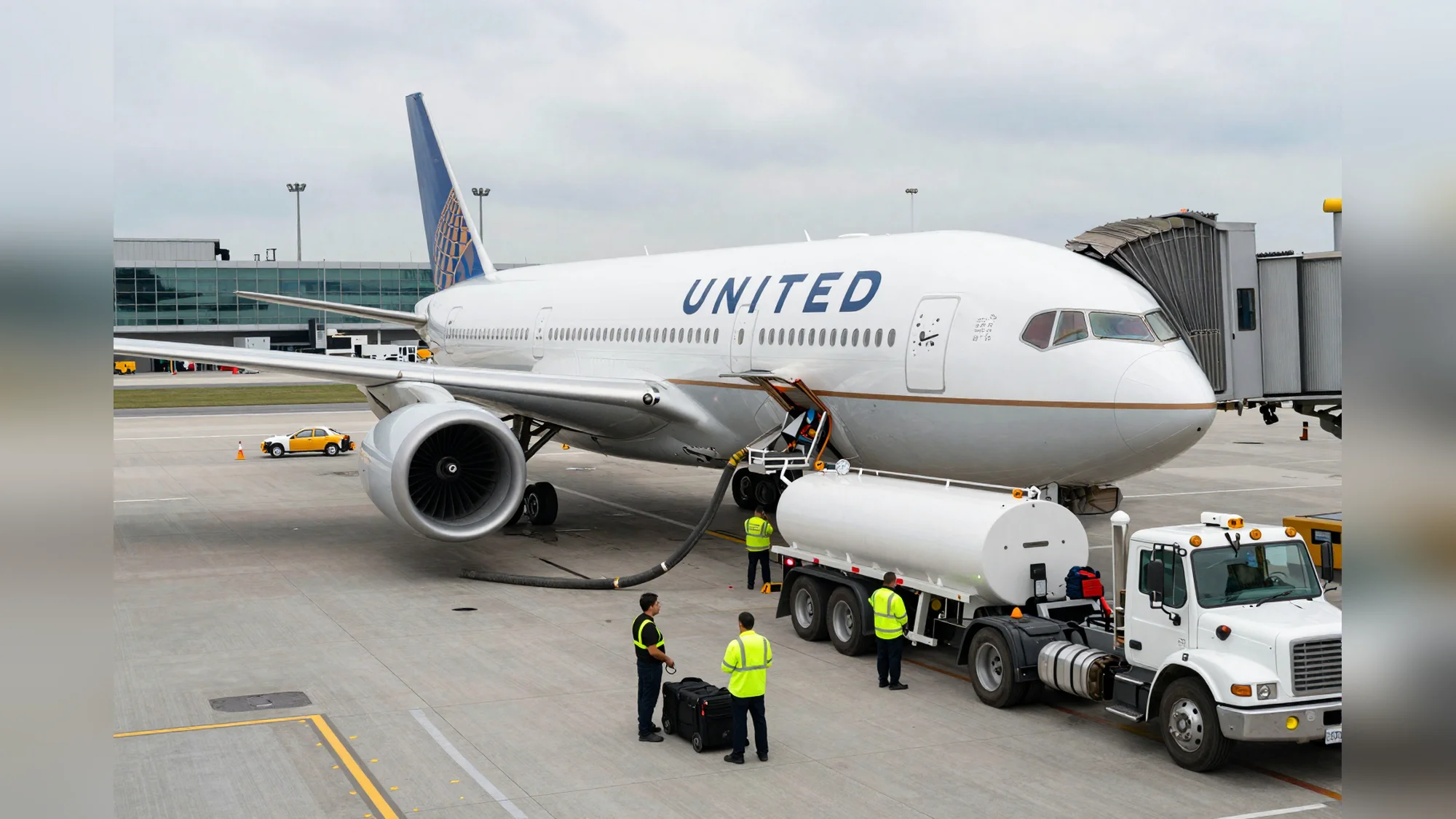
Nearly $6 billion: United Airlines said on July 15 that higher jet fuel prices will add almost that amount to its 2026 fuel bill versus the start-of-year outlook. The carrier reported second-quarter adjusted earnings per share of $1.99, beating the LSEG-based analyst consensus of $1.88, and revenue of $17.67 billion versus expectations of $17.61 billion. United warned the fuel jump, and an 84 percent year-on-year rise in quarterly fuel expense to $2.3 billion, will squeeze margins and push fares higher for leisure and corporate travellers. Executives also said they have begun tying guidance to the most current Gulf Coast jet fuel forward curve to reflect oil market volatility.
Nearly $6 billion is the extra fuel expense United calculated using fuel prices as of mid-July, the airline said. That estimate was derived from the Gulf Coast jet fuel forward curve as of July 14 and uses industry data showing jet fuel spiking in July, including Argus data published by Airlines for America. United also said the rise since the start of July added roughly $575 million to expected third-quarter costs, equivalent to about $1.12 of adjusted EPS impact.
What did United report for the quarter?
United posted second-quarter adjusted EPS of $1.99, topping the $1.88 analysts expected based on LSEG estimates, and revenue of $17.67 billion compared with consensus of $17.61 billion. GAAP net income fell more than 17 percent to $805 million, or $2.46 a share. Fuel expense jumped 84 percent year on year to $2.3 billion, a swing that's now the single largest variable after labour on United's cost base.
United raised the low end of full-year adjusted EPS guidance, now projecting $9.00 to $11.00 per share, up from the April low of $7.00, but it kept third-quarter adjusted EPS guidance at $2.50 to $3.50 per share, below the average analyst forecast of about $3.60. The airline said it expects to recover roughly 80 to 90 percent of the current fuel increase in the third quarter and to offset the remainder by the fourth quarter through higher fares and other measures. United also warned it may cut capacity if fuel stays elevated, noting it expanded flying 3.5 percent in the second quarter but is prepared to moderate near-term flying.
United said strong pricing power is helping absorb fuel inflation: total unit revenue rose 12.1 percent in the second quarter, the highest year-on-year unit revenue growth since early 2023 according to FactSet. The carrier pointed to rising revenue from premium seats, corporate travel and basic economy, along with higher cargo and loyalty income, as levers that blunt the fuel shock. Still, based on current fuel curves, the company quantified the added expense as nearly $6 billion for the year versus its early-2026 outlook, signalling the pressure will show up in margins and in higher fares for travellers.
Related Articles
- Hormuz reopens as two tankers carry 4m barrels
- United CEO floated merger with American months earlier
United said it expects to recover roughly 80-90% of the fuel increase in the third quarter, management said.
This article was created with AI assistance.