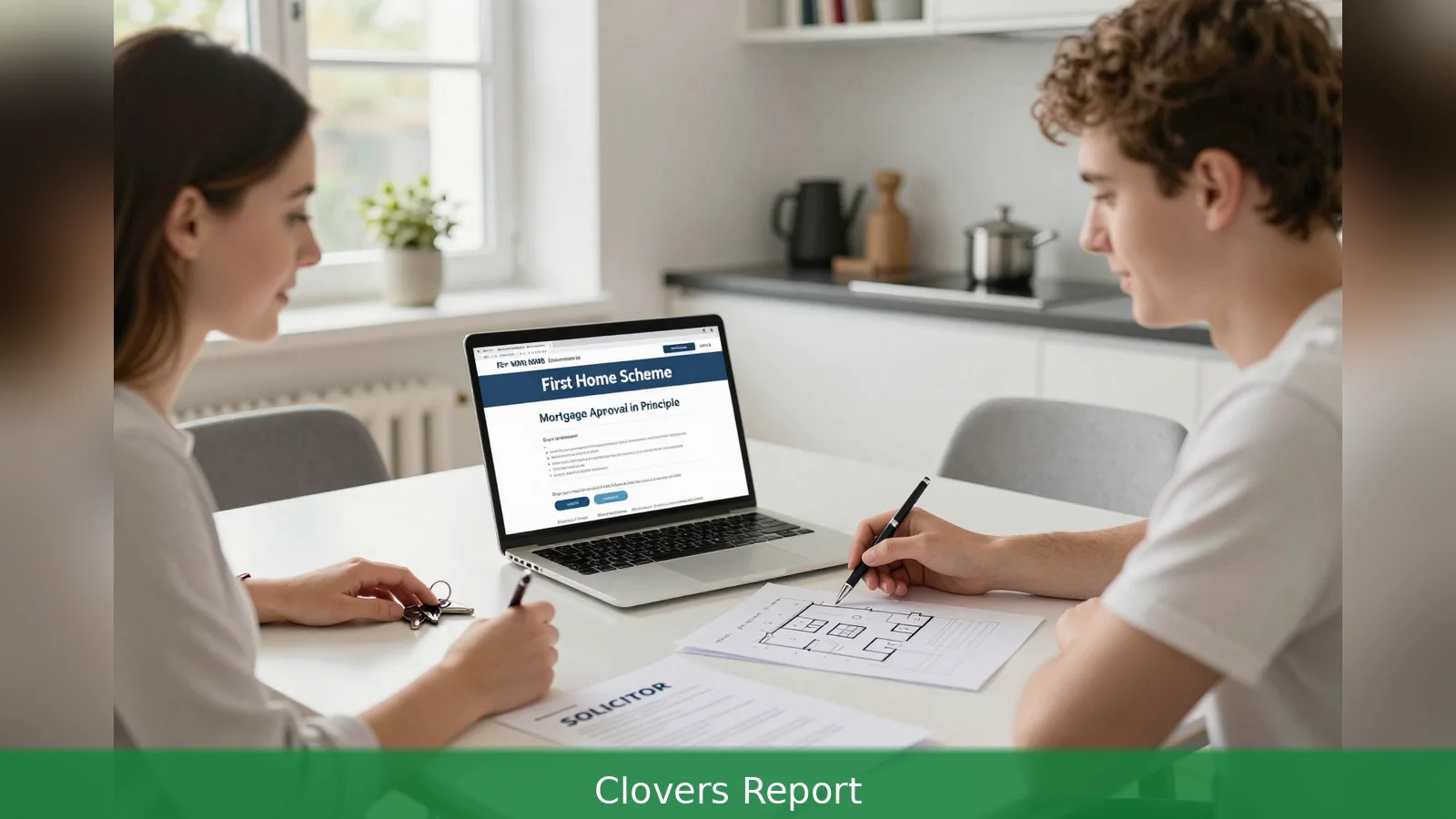
You will borrow substantially less to buy or build your first home if you qualify for the First Home Scheme, because the State and participating lenders provide a shared equity payment that can cover up to 30% of the purchase or build cost. The scheme issues an equity facility that sits alongside a mortgage and is drawn down at completion or in staged payments for self-builds, reducing the immediate mortgage you need. The scheme applies to newly built houses and apartments in private developments across the Republic of Ireland and to qualifying self-builds, and it can be combined with the Revenue Help to Buy refund where you qualify, though using Help to Buy will reduce the First Home Scheme contribution. To get started, the practical first steps are clear: visit firsthomescheme.ie, secure a Mortgage Approval in Principle from a participating lender and generate a Preliminary Certificate.
Your mortgage balance will be smaller on completion because the First Home Scheme provides an equity facility alongside a lender mortgage, drawn down at completion or in stages for self-builds.
1. Check eligibility and the property rules
First, confirm you meet the personal tests. The First Home Scheme is available to first-time buyers, qualifying fresh start applicants and eligible tenants who want to buy the home they're renting. To be a first-time buyer you must not previously have bought or built a home to live in, and you must not currently own any interest in property in Ireland or abroad. Fresh start applicants are people who previously owned a home but no longer have a financial interest in it because of separation, divorce, insolvency or bankruptcy. You must be over 18 and have the right to live in Ireland, and the property must be your only place of residence.
Second, check the property type and the local price cap. The scheme applies to newly built houses and apartments in private developments across the Republic of Ireland and to qualifying self-builds. For self-builds the plot must be one you own or are buying, the house must be detached or semi-detached, and the build must be managed by you or your contractor. Local authority price caps apply, so the new home must cost less than the maximum price for the area where it sits. These rules and definitions are summarised on Citizens Information and set out on the First Home Scheme website.
Worked example: a joint purchase requires that every named buyer meets the first-time buyer or fresh start criteria. If one buyer owned a property previously and the other is a first-time buyer, the pair won't be eligible as a joint first-time buyer purchase under the scheme.
2. Secure Mortgage Approval in Principle from a participating lender
Before you apply to the First Home Scheme you need a Mortgage Approval in Principle, or AIP, from a participating lender. The lender assesses your mortgage eligibility independently and will confirm what mortgage they can offer.
The AIP is a required document for the FHS application.
Use the AIP to set realistic price limits when you shop for homes. The lender’s offer determines the mortgage portion, and the First Home Scheme then bridges the remaining gap up to the scheme percentage. Participating lenders will take the usual mortgage checks, so have your income, ID and deposit evidence ready.
Worked example: if a lender issues an AIP for a mortgage that covers 70% of a purchase price, the First Home Scheme equity facility could cover up to the remaining 30%, subject to local price caps and any Help to Buy interaction.
3. Generate a Preliminary Certificate while you finalise choices
Once you hold an AIP and meet the basic eligibility rules you can go to the First Home Scheme website and generate a Preliminary Certificate before you have chosen a final property or lender. The Preliminary Certificate gives you an indication of the FHS amount you may qualify for and lets you keep options open while you shop for a home or compare mortgage offers.
Treat the Preliminary Certificate as a planning tool. It shows the likely funding gap the scheme will close and helps you judge whether a given new build or self-build will be affordable after the scheme contribution. It also makes conversations with builders, developers and mortgage brokers more precise.
Worked example: a Preliminary Certificate might indicate a 30% equity facility on a notional purchase price, but the final scheme allocation will depend on the purchase price, the lender’s mortgage offer and whether you will also claim the Help to Buy refund.
4. Apply for an Eligibility Certificate once decisions are final
After you have chosen the property, your mortgage provider and whether you will use Help to Buy, you make a formal application to the First Home Scheme and, if approved, you receive an Eligibility Certificate. That certificate confirms your eligibility and the FHS amount you are allocated based on the purchase price or build cost, the interaction with any Help to Buy claim, and the lender’s offer.

This is the moment when the scheme confirms numbers you can rely on for contracts and mortgage letters of offer. If you plan to claim the Revenue Help to Buy refund, check the HTB rules with the Revenue Commissioners because combining the two will reduce the First Home Scheme share. Citizens Information and the Revenue Commissioners explain the Help to Buy conditions, including the time window for eligible tax years and value limits.
Worked example: if you choose to use Help to Buy and you qualify, the First Home Scheme contribution will be reduced accordingly and the final allocation will be confirmed on the Eligibility Certificate.
5. Pass the Eligibility Certificate to your lender and obtain the Mortgage Letter of Offer
Once you provide the Eligibility Certificate to your mortgage lender, the lender issues a Mortgage Letter of Offer that incorporates the mortgage and the confirmed FHS funding amount. The Letter of Offer is required to progress the FHS application and to move to contract stage.
Read the lender’s Letter of Offer carefully. It sets the mortgage terms and the approved loan amount; the FHS funding then bridges the remaining gap up to the scheme percentage. The scheme won't proceed without the lender’s formal offer.
Worked example: the Letter of Offer will show the mortgage repayment terms and the loan to value that the bank will apply. Keep your solicitor informed so the offer and the Eligibility Certificate can be used together at exchange.
6. Submit the Mortgage Letter of Offer and supporting documents to the First Home Scheme
To progress to completion you must give the First Home Scheme the Mortgage Letter of Offer and any other required documents, such as proof of right to reside in Ireland, identity documents, the signed contract and solicitor details. For self-builds you will also need evidence of plot ownership, plans and the contract or documentation for stage payments.
The scheme reviews these documents and, when everything is in order, accepts the contract and supporting paperwork. The online application process guides applicants through document uploads, and the First Home Scheme site provides personalised support during the application.
Worked example: if you are self-building the scheme will agree a stage payment schedule and release funds to your solicitor according to that schedule; for standard purchases the scheme releases its funds on completion.
7. Completion, disbursement and what happens after you move in
On completion, the First Home Scheme releases its funds to your solicitor to complete the purchase in parallel with the mortgage drawdown. For self-builds the scheme releases funds to your solicitor according to the agreed stage payment schedule. In return the scheme takes an equity stake in the property proportionate to the amount it provided.
You may buy back the scheme’s equity share at any time, but you aren't obliged to do so. The monetary redemption amount will track the market value because the equity stake is a percentage of the home’s value; as property prices move up or down the percentage stake remains the same while the euro amount needed to redeem changes. The scheme also sets out the events that require repayment of the equity stake, such as sale or transfer of the property, and Citizens Information summarises the standard repayment situations.
Worked example: if you sell the house the First Home Scheme’s percentage stake must be repaid from the sale proceeds in proportion to the stake it holds at that time.
The First Home Scheme can't be used together with the Local Authority Affordable Purchase Scheme or the Local Authority Home Loan, though it can be used with the Revenue Help to Buy refund where applicants meet HTB conditions. Both the First Home Scheme and the Housing Agency recommend independent financial and legal advice before you apply. The scheme website includes an explicit warning that property prices can move and that independent advice is strongly recommended.
Prepare these critical documents in sequence: proof that you meet the first-time buyer or fresh start tests, proof of right to reside in Ireland, the Mortgage Approval in Principle from a participating lender, the Mortgage Letter of Offer when issued, a signed contract for the property and solicitor details for funds release. For self-builds prepare plot ownership evidence, house plans and the stage payment contract.
Practical tip: keep a digital folder set up from day one. Name files clearly so you can upload them to the online application without delay. Communicate early with your solicitor and lender about the expected completion timetable so the scheme’s disbursement is coordinated with the mortgage drawdown.
If you intend to claim the Revenue Help to Buy refund, check eligibility and timing rules with the Revenue Commissioners because HTB refunds relate to income tax and DIRT paid in the four prior tax years and HTB has specific maximum values and date windows. Combining HTB with the First Home Scheme will reduce the FHS contribution, so seek tax and financial advice early if you plan to claim both supports. The interaction affects the allocation of state support, the percentage equity the scheme takes and your immediate mortgage requirement.
Further help and where to start
Both the First Home Scheme website and the Housing Agency direct applicants to begin online. The immediate practical step is to start at firsthomescheme.ie, secure Mortgage Approval in Principle from a participating lender and generate a Preliminary Certificate to see the likely FHS amount you may qualify for. Citizens Information and the Revenue Commissioners remain the definitive public sources for the eligibility details and the Help to Buy rules.
I'll save you the trouble: get AIP first, then the Preliminary Certificate. The rest follows a clear sequence and the scheme's online portal guides you through each document upload.
Related Articles
- PPS number: five steps to apply in Ireland
- Cost of living Ireland 2026: why families are falling behind
- Bitcoin pullback: 25% slide exposes market risks
Start at firsthomescheme.ie, get a Mortgage Approval in Principle from a participating lender and generate a Preliminary Certificate to see the First Home Scheme amount you may qualify for.
This article was created with AI assistance.


