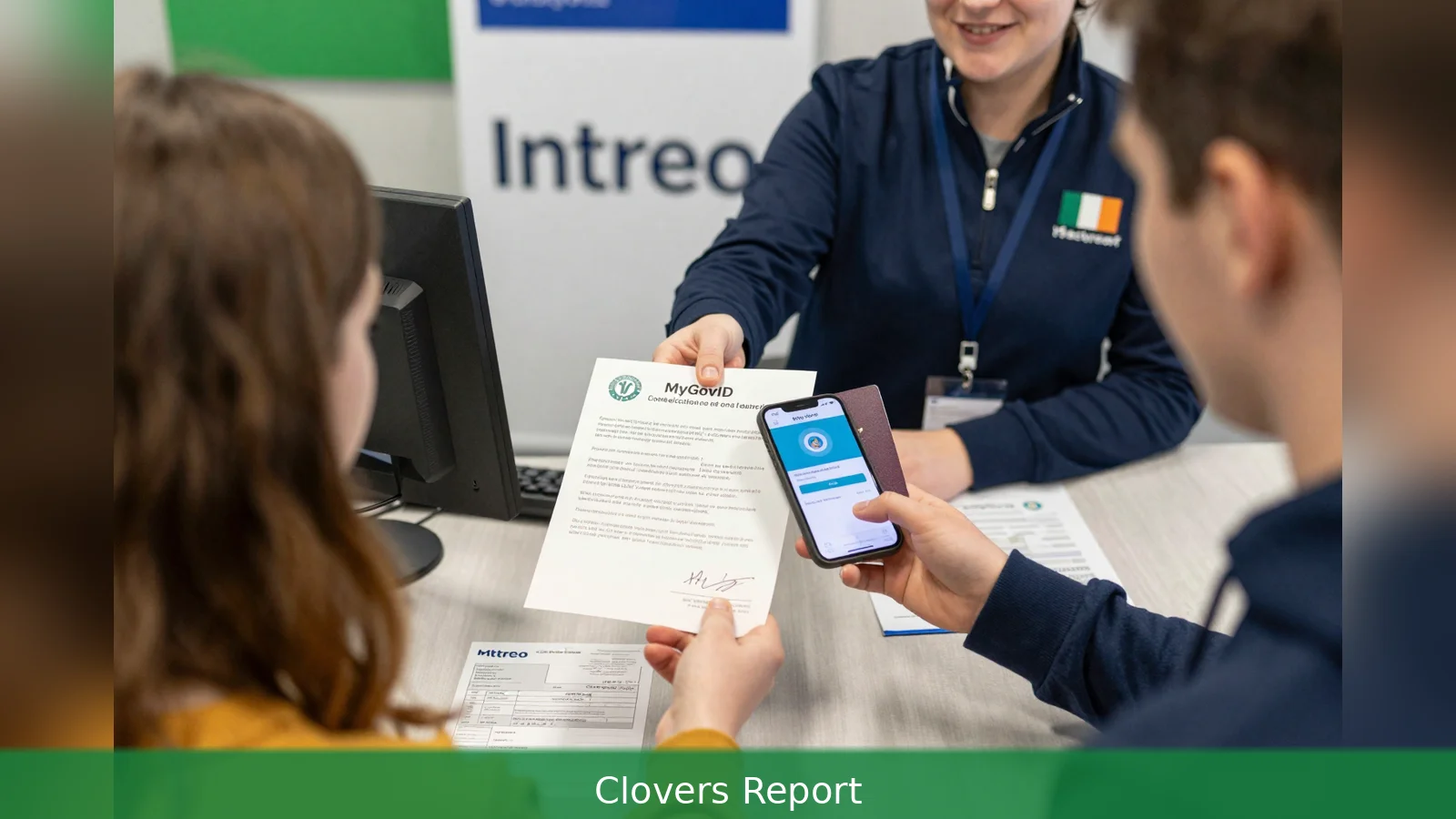
You won't be able to start paid work, claim social welfare or use many state health services without a Personal Public Service number, because the Department of Social Protection requires an online MyWelfare application plus an in-person identity appointment. Applicants aged 18 or older must open a basic MyGovID account, complete the MyWelfare form, show proof of identity and address, and explain a legitimate reason for the number, such as starting a job, getting a medical card or college registration, according to Gov.ie and Citizens Information. If you believe you already had a PPS number, Citizens Information and the Department say don't apply again but trace the existing record via payslips, a Public Services Card or by contacting your local Intreo centre. To begin, register for a basic MyGovID and start the PPS application on MyWelfare where you will book the mandatory face-to-face appointment and see the full list of documents to bring.
Without a PPS number you will be unable to start paid employment, claim social welfare or register for many health services, because the Department of Social Protection operates a two-part system that begins online on MyWelfare and finishes with a verified, in-person identity appointment.
1. Check whether a PPS number already exists for you
First, confirm whether you already have a PPS number. Citizens Information and the Department explain that the PPS number is a unique identifier composed of seven digits followed by one or two letters used for social welfare, tax, health and other public services. If you were born in Ireland after 1971, started work in Ireland after 1979, or already receive social welfare, you are likely to have been allocated one.
Look for the number on documents you already hold: a Public Services Card, medical or GP visit card, PAYE tax documents, payslips, or correspondence from the Department of Social Protection. If you find it there's no need to apply again. If you can't find the number, Citizens Information notes you may apply, provided you have a valid reason for needing one.
Worked example: Anna returned to Ireland after several years abroad. She checked her old payslips and a GP card and found her PPS number. Citizens Information would advise her to contact her local Intreo centre if the number were not on any documents.
2. Set up MyGovID and start the MyWelfare application
The Department requires applicants aged 18 or over to register for a basic MyGovID account before starting the PPS application on MyWelfare. The online form collects your personal details, asks you to state a valid reason for the PPS number, and, if you are applying for a child, requests the child’s details.
You can apply for both yourself and a child in the same online session.
When you complete the online form you will also book the mandatory in-person appointment at an Intreo centre or at a designated PPS Number Allocation Centre. The Department’s pages on Gov.ie and the MyWelfare notifications will give the appointment date, time and a checklist of the documents you must bring.
Worked example: A student accepts a college place and needs a PPS number to register. On MyWelfare she selects ‘college registration’ as the reason, creates a basic MyGovID, completes the form, and books the appointment that appears in her MyWelfare notifications.
3. Gather the identity, address and reason documents
You must bring three things to the appointment: evidence of identity, evidence of address, and a clear reason for needing a PPS number. Gov.ie sets out acceptable documents and the specific list will be provided in your online appointment notification.
For identity, acceptable documents vary by circumstance. The Department lists examples: for an Irish citizen born in Ireland a current Irish passport or a current Irish or UK driving licence or Irish learner permit are acceptable. The Department will also check birth records held by the General Register Office when verifying a person’s details, and you may be asked for an Irish birth certificate if a SAFE officer can't verify your birth information.

People born in Northern Ireland or elsewhere in the UK may present a current passport or a birth certificate together with a current full driving licence or Irish learner permit. Irish citizens by naturalisation should bring a current Irish passport or a Certificate of Naturalisation with photograph. Applicants registered by foreign birth registration may bring a current Irish passport or the foreign birth registration document.
Worked example: Mark was born in Northern Ireland and has a UK birth certificate and a full UK driving licence. He includes those documents in his MyWelfare appointment pack so the SAFE officer can verify his identity at the Intreo centre.
4. Attend the in-person verification appointment
The appointment is mandatory. MyWelfare and Client Identity Services require every applicant, including children for whom a parent or guardian applies, to attend a face-to-face verification slot. Walk-in attendance isn't accepted; you must book the slot through the online application.
At the appointment a SAFE officer will verify your documents, record the information needed and allocate the PPS number. Third-party or agent submissions are allowed in some circumstances, but the Department’s guidance explains the special procedures and extra documentation required. Children normally attend with a parent or guardian.
There are special arrangements for particular groups. For people arriving from Ukraine under the EU Temporary Protection Directive the Department asks that they don't apply online but instead call or attend one of the PPS Number Allocation Centres where staff are prepared to handle the applications and to support urgent income needs.
Worked example: A parent applies for a PPS number for a young child. At the booked appointment the parent brings the child and presents identity and address documents for both. The SAFE officer confirms details and records the application directly.
5. After verification and practical points for starting work
The Department issues PPS numbers after identity verification. If you are returning to Ireland and think you already have a PPS number, the Department advises contacting your local Intreo centre or Social Welfare branch office rather than making a fresh application.
The Department allows some applicants to start the process while living abroad via the online route, but the in-person verification requirement still governs identity confirmation. For precise steps, consult the Department’s guidance page titled "Applying for a PPS Number if you are living outside Ireland" on Gov.ie.
Third-party practical guides add useful but separate details. A relocation guide published by Settle.ie recommends taking employer letters or college acceptance letters as proof of reason at your appointment, and reports that applicants often receive their PPS number by post within two to four weeks. Settle.ie also notes that you can ask for a short letter from the Department at the appointment to give to an employer if a PPS number is needed urgently. Because the Department’s own pages don't headline a standard processing time or a fee, treat Settle.ie’s timing and the no-fee statement as third-party guidance rather than Department pronouncements.
Worked example: A new arrival has an employer waiting for a PPS number. At the verified appointment they request a short departmental note to hand to the employer while the formal PPS arrives by post, following the practical path described on Settle.ie.
Document and eligibility caveats to keep in mind
The Department and Citizens Information emphasise that you only get a PPS number if you actually need one to access public services. Stating a valid reason matters. For example, simply looking for work without a specific entitlement doesn't alone entitle someone to a number, although starting a job does create a tax and social welfare need for one.
Citizens Information also highlights special cases to watch: older "W" numbers are being phased out, and individuals who previously shared a PPS number with a spouse may need their own number after divorce or the death of a spouse. SAFE officers don't have direct access to adoption records, so adopted persons may need to provide certified documents to allow verification through the General Register Office checks.
After you receive it, use your PPS number to register with Revenue for tax purposes, make social welfare claims, apply for health entitlements such as the medical card, and access other specified public services.
The Department administers the Public Services Card in parallel with the PPS number. The campaign pages on Gov.ie explain that the Public Services Card authenticates identity for a range of services and that links between the PSC and PPS number are managed by the Department.
Keep proof of your PPS number in secure records and provide it only to organisations authorised to use it. If you are unsure whether an organisation is authorised, Citizens Information recommends checking before sharing the number.
In short
1. Check first whether you already have a PPS number on a Public Services Card, payslip, PAYE paperwork or Department correspondence. 2. Register for a basic MyGovID and start the online application on MyWelfare where you will state your reason and book the mandatory appointment. 3. Bring the documents listed in your appointment notification: proof of identity, proof of address and evidence of the reason you need the PPS. 4. Attend the booked face-to-face verification at an Intreo centre or designated PPS Number Allocation Centre. 5. If you need to return to work before the formal number arrives, discuss the short letter option at your appointment as described in third-party relocation guides.
Related Articles
- Child Benefit in Ireland: 7 steps to your first payment
- 9 Omegle Alternatives for Safer Random Chat in 2026
- Metallica at Aviva: 2 nights, spectacle vs missing anthems
Register for a basic MyGovID, complete the MyWelfare form and book the mandatory in-person appointment. Bring the ID, proof of address and evidence of your reason; if you think you already have a PPS number, contact your local Intreo centre rather than applying again.
This article was created with AI assistance.


