
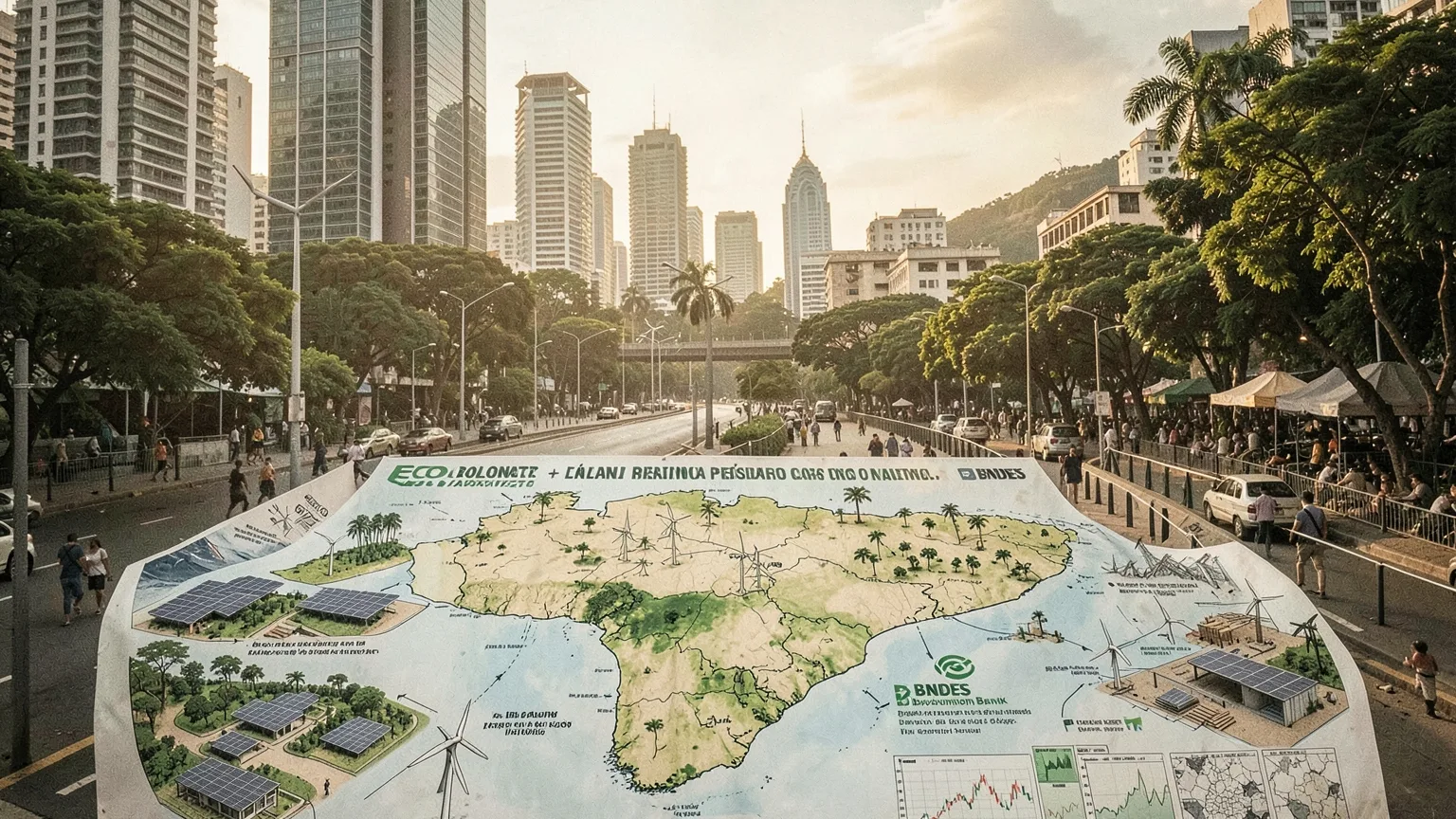
With Senator Flávio Bolsonaro and President Luiz Inácio Lula da Silva heading to an October 25 runoff, Brazil’s flagship Eco Invest programme, a nascent regulated carbon market and BNDES-backed forest finance face immediate operational and political uncertainty that will shape near-term investor risk.
Where the vote stands and the political scenarios that matter
The October 25 runoff could put flagship climate-finance programmes at risk of abrupt policy shifts that would slow, reshape or accelerate billions in public and private green capital. Senator Flávio Bolsonaro topped the first-round vote and will meet President Luiz Inácio Lula da Silva in a runoff on October 25.
Which coalitions will matter for policy is straightforward: the Liberal Party will hold the largest bloc in the incoming Chamber of Deputies with 121 seats. That gives the conservative camp real legislative heft over how finance and environmental programmes are sustained.
Practically, the Finance Ministry and its National Treasury department run Eco Invest auctions. They would control the public "catalytic" capital lines that underpin the programme. The Environment Ministry participates in approvals and enforcement work that shapes demand for credits and green projects. www.riotimesonline.com www.reuters.com
State development bank BNDES is a separate, powerful actor for loans and direct investment in forestry and the bioeconomy. Its board and management choices would directly affect credit lines and project approvals regardless of ministerial shifts.
On policy positions that would change climate-finance commitments, Mr Bolsonaro’s campaign has promised to strengthen a regulated carbon market and expand the bioeconomy. It says it would prioritise market-based conservation incentives and stepped-up enforcement to eliminate illegal deforestation by 2029. The campaign has declined to say whether it would keep Lula’s green finance initiatives intact.
President Lula has positioned Brazil as a hub for climate finance, pledged to expand programmes such as Eco Invest and pushed legislation to prepare a regulated carbon market where companies can meet official decarbonisation targets.
How Brazil’s climate-finance architecture and existing deals could respond
The Eco Invest Brasil programme is run by the Finance Ministry’s National Treasury and uses public “catalytic” capital to crowd in private and foreign money for green value chains.
For the fifth auction, the National Treasury approved 13.2 billion reais in public catalytic capital. It expects that will mobilise 36.75 billion reais of private capital for a planned total of 49.95 billion reais.
A Treasury presentation said the first four auctions mobilised about US$25.5 billion. Agência Brasil reported that the five rounds together approach 200 billion reais. Reuters described Eco Invest as having mobilised roughly 190 billion reais since 2024. www.riotimesonline.com www.reuters.com
The Eco Invest rules create two main instruments: innovation funds that take early-stage risk and corporate-credit lines for proven clean technology. Winners in the latest round expect 60%-80% of private credit lines to come from foreign capital.

Under a June Finance Ministry ordinance, banks can draw 25% of their fund loans once the auction result is approved. They may draw a further 50% after proving, within 12 months, that one quarter of the promised private capital has been raised. An independent auditor and an online Eco Invest Monitor track the use of the money.
International finance lines already tied to the programme include an authorisation in September for a loan of up to US$1 billion from the Inter-American Development Bank to support Eco Invest.
Separately, Brazil passed legislation in 2024 to prepare a regulated carbon market that will let companies buy credits to meet official decarbonisation targets and trade them internationally.
BNDES has been channeling loans and investments into the forest economy and has provided roughly 15 billion reais for projects aimed at recovering and protecting local forests.
This setup means some projects have technical momentum. It combines legally authorised Treasury drawdown rules, pre-approved public catalytic capital, independent audits, and external loans. A new administration cannot easily reverse this momentum. However, commercial investors can still re-allocate mobile capital, which is a separate factor.
What this means for international funders and investors: risks, triggers and practical scenarios
Short-term investor risk focuses on political uncertainty before the October 25 runoff. It also depends on whether new or returning ministers keep Finance Ministry rules, hedging facilities, and multilateral links. These rules support foreign participation in Eco Invest. www.riotimesonline.com www.reuters.com
A clear market trigger to watch is the October 25 runoff result. Any rapid changes at the Finance Ministry, the National Treasury and Environment Ministry would alter Eco Invest’s rules or the state’s ability to deliver catalytic capital.
Operational triggers inside Eco Invest also matter. Under existing rules, banks can draw 25% once a round is approved and must show within 12 months that at least 25% of private capital is raised to unlock further disbursements. Failures in private capital mobilisation would stall later tranches.
Reputational and conditionality risks are already visible. Brazilian industry groups warned candidates that regulatory uncertainty would risk mobile private capital and could push investors elsewhere. Climate advocates say conservative proposals clash with past legislative steps to curb deforestation.
Practical scenarios for funders and their likely timelines, based on Brazil’s institutions and campaign statements:
-
Conditional continuation: the Finance Ministry’s institutional rules, the June ordinance’s drawdown schedule and multilateral links such as the authorised IDB loan could allow projects approved under Eco Invest to proceed while a new government refines policy during a transition period. Early signs of this would be Treasury disbursements and independent-auditor confirmations. The next 12 months are critical for private capital draws.
-
Accelerated unwind or slowdown: if a new leadership chose to deprioritise Lula-era initiatives, political signals or personnel changes at the Finance Ministry, Environment Ministry or BNDES could slow approvals and deter foreign lenders and institutional investors. That would produce near-term capital reallocation. Observers note campaign rhetoric and past policy records raise this possibility, but campaign spokespeople have so far said programmes would be developed in transition.
-
President Lula wants to expand climate finance tools. Brazil also has existing laws for a regulated carbon market. These create a path for deeper international engagement if a pro-climate finance administration continues these programs. Indicators would include new public catalytic allocations, finalisation of the IDB loan, and faster private capital mobilisation. www.reuters.com www.riotimesonline.com
For funders and investors, the immediate practical checklist is short and specific. Monitor the October 25 runoff and any early ministerial appointments. Watch whether Treasury or an independent auditor clears the 25% disbursements for the fifth auction. Follow signs of private capital mobilisation against the 12-month condition, and track public statements about whether Eco Invest rules, the hedging facility and the IDB loan will be honoured.
Investors should consider both contractual safeguards and market dynamics when assessing exposure. Eco Invest includes contractual drawdown rules and multilateral links that support some activity. Corporate and institutional investors can quickly move mobile capital if regulatory or reputational concerns increase.
Watch the October 25 runoff result closely. Also, note any early cabinet changes affecting Finance, Treasury, or BNDES. Track the Treasury disbursement and auditor clearance for the fifth auction. Monitor private capital mobilisation checkpoints over the next 12 months. Finally, watch for formal steps on the IDB loan.


