
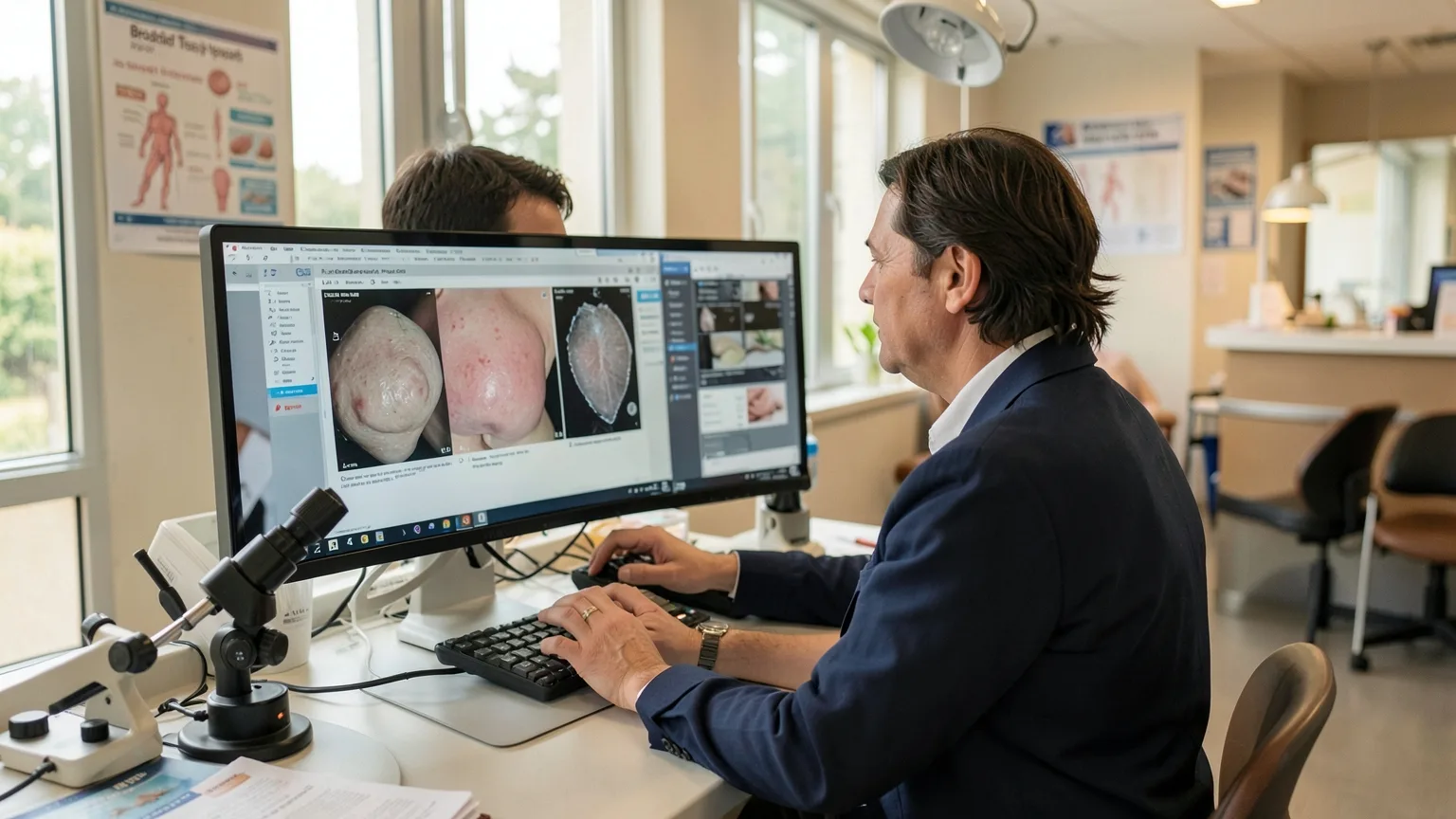
Bradford Teaching Hospitals began using an AI system in April to triage GP-referred skin-lesion appointments, increasing clinic capacity and reducing some unnecessary biopsies while clinicians continue to review results.
How the AI pathway works
The BBC reports the dermatology team at St Luke’s Hospital in Bradford adopted the DERM system in April and is using it as part of a GP-referred tele-dermatology pathway [www.bbc.com]. The BBC reports a healthcare assistant takes three photographs of a suspicious mole or lesion, uploads them for rapid AI analysis, and the system flags lesions as suspicious or likely benign; the BBC reports that in Bradford every image is then double-checked by a clinician before a final decision is made. The BBC reports patients that the pathway treats as benign are offered advice and may be discharged off the urgent suspected-cancer route, while cases flagged as suspicious are routed to specialist review in a one-stop clinic.
What has changed, and what the figures mean
Agentlocker reports the clinic now says it can see 32 patients per session, up from 24 before the AI was introduced, and that the trust estimates unnecessary biopsies have fallen by about 10% since the system began [agentlocker.ai]. The same reporting notes Bradford Teaching Hospitals handles about 5,000 suspected-skin-cancer referrals each year and that roughly 8% (about 400 patients) are found to have malignant cancer. Those figures describe increased capacity across sessions and fewer procedures, not a measured, quantified reduction in each individual patient’s waiting time; the trust’s clinicians say the change has had a “big impact” on bottlenecks and waiting lists, but no precise per-patient waiting-time figures are published in these accounts.
Accuracy, oversight and evidence still being gathered
The BBC reports the company behind DERM, Skin Analytics, claims the AI is 99.9% accurate at ruling out melanoma; that is a developer-reported figure and the clinic’s accounts note NICE has recommended use of the technology in the NHS for the next three years while more evidence is collected [www.bbc.com]. A large real-world dataset presented at the European Academy of Dermatology and Venereology followed 8,391 patients and found high sensitivity and meaningful capacity gains: the reporting of that study says sensitivity exceeded 98% for invasive melanoma, squamous cell carcinoma and basal cell carcinoma, specificity was 72.1%, and post-market surveillance identified six false-negative cases; the study team reported substantial reductions in biopsy and follow-up rates and large clinician-time savings [bioengineer.org]. Those study findings relate to a deployment that in some sites allowed the AI to discharge benign cases autonomously for a proportion of patients, which is different from Bradford’s current practice of clinician double-checking every image; the study authors and Bradford’s team both stress ongoing monitoring and continued clinical oversight while evidence is gathered.
What it means for patients in Ireland
This service is an NHS pathway operating at St Luke’s Hospital in Bradford, England; it is not a change to waiting lists in Ireland or a service available through Irish health services. If you have concerns about a mole or skin lesion, contact your GP or local health service for advice; an AI result in another health system does not replace a full clinical assessment and Bradford’s model keeps clinicians involved in final decisions.
This article was created with AI assistance.



