
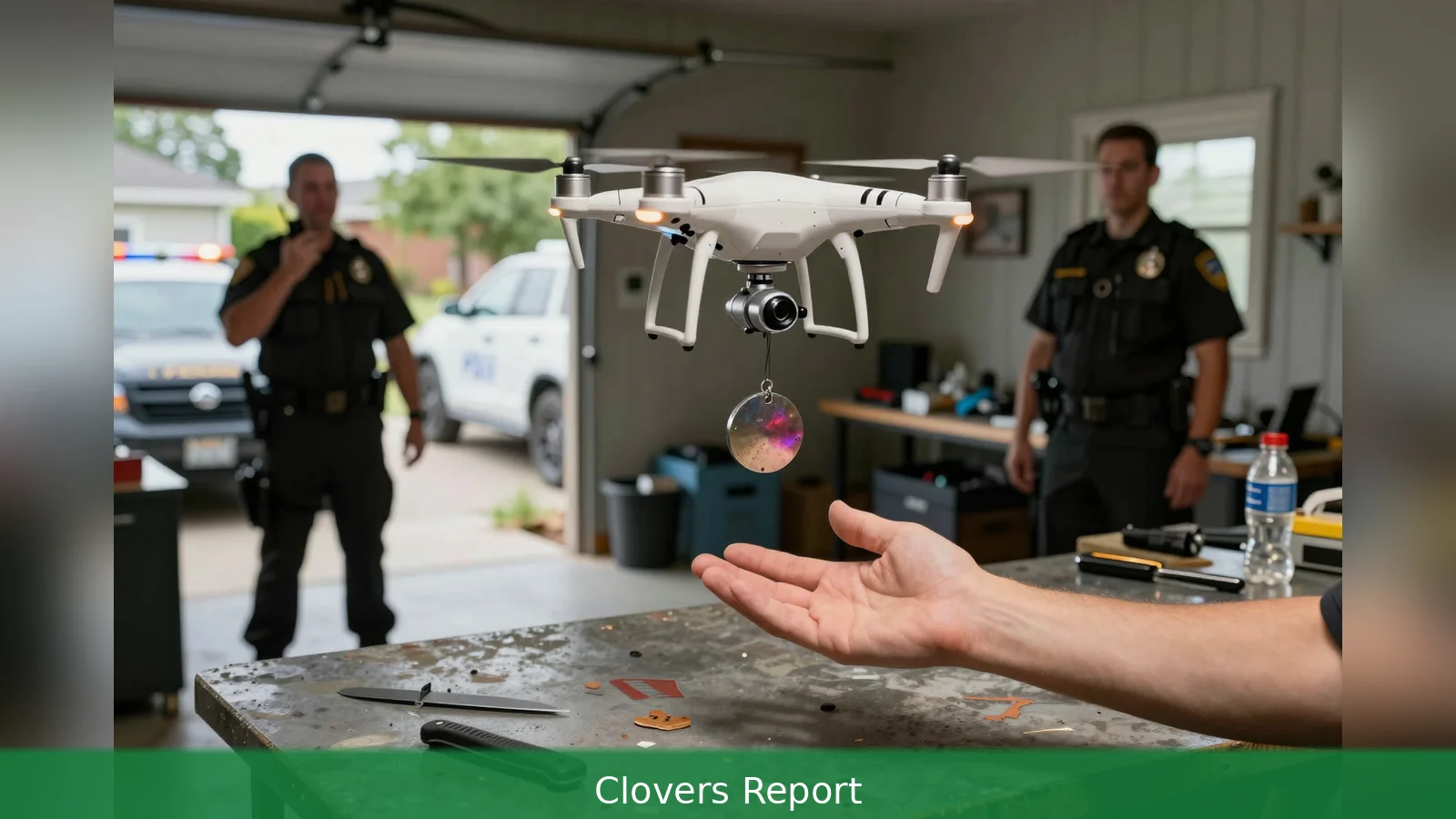
A small quadcopter threaded through the dim clutter of a south Sacramento garage and hovered inches above a motionless hand, a magnet dangling beneath it. The Sacramento County Sheriff’s Office released the footage on June 22 showing that drone, fitted with a strong magnet, pulling a knife free during a June 18 standoff, a tactic the agency described as a nationwide first. Deputies said they had surrounded the Goya Parkway residence while searching for a parolee-at-large, and that negotiators received no response, so the team switched from a search drone to a magnet-equipped craft to remove the blade. The sheriff’s office called the move life-saving, and said the manoeuvre reduced risk to officers and to the unresponsive subject.
Inside the homeowner’s cluttered garage on Goya Parkway deputies watched a small quadcopter lift a blade free while a second drone supplied an observer camera feed. Deputies say they had surrounded the house while searching for a wanted parolee-at-large and used a standard interior-search drone first to locate the hiding person because negotiators received no response.
How the retrieval unfolded
Video from the scene shows a person in a hoodie lying facedown or slumped on furniture with one arm outstretched. After the search drone found the subject, deputies flew a second small quadcopter carrying a magnet on a cable. The magnet hooked the knife by the blade and the drone carried it outside where officers retrieved it.
Deputy Tom Lee, identified as Lead Pilot of the Sheriff’s Craft Observation Utilizing Technology team, described the manoeuvre as an instance of thinking outside the box and said the drones exist to reduce risk to officers. The department posted the footage to Facebook and Instagram on June 22 with the Mission: Impossible theme as the soundtrack, closing with the knife spinning beneath the drone as it left the garage.
The sheriff’s office characterised the tactic as life-saving. The office said the suspect may have overdosed and praised the patrol officer who devised the magnet idea as having possibly saved a life and prevented an officer from using deadly force. Deputies said they then took the suspect into custody without further incident.
The released footage does not make clear what happened with a firearm the suspect was reportedly seen carrying earlier.

What this says about policing with drones
The Sacramento deployment is the latest example of law enforcement expanding the physical roles for drones beyond surveillance. The incident involved more than a single unmanned aircraft: deputies also introduced a robotic dog to the scene, which they said cleared debris in the garage and would have been the next option if the drone had failed to retrieve the knife.
Local coverage of similar programmes has cited a county release that said drones arrived before deputies on many calls in a pilot programme. Those pilots credited the aircraft with assisting arrests and searches.
Agencies in California and elsewhere have been positioning drones as first responders for certain kinds of calls, particularly where an early aerial view can reduce risk for officers entering confined or cluttered spaces.
Not everyone greeted the Sacramento video with unqualified praise. Observers on the department’s Facebook post noted that the subject appeared unresponsive, and some commenters criticised the video as theatrical given the apparent condition of the person shown.
Some industry observers cautioned that remotely removing a weapon is practicable mainly when a person is incapacitated or non-resistant, and not when a suspect is fully conscious and combative. In this case deputies say the tactic removed immediate risk with minimal contact, and other options were available on site if the drone approach had failed.
Operational follow-ups the department has flagged include technical work to expand drone capabilities. Deputy Lee said the SCOUT team’s next development goal is a way for drones to release items deliberately, which could let them deliver life-saving devices, phones, or other small objects and improve controlled retrievals in future incidents.
The episode raises practical and ethical questions about extending drones from eyes in the sky to hands on the ground. For now Sacramento’s sheriff sees the tool as one more way to protect both officers and people in distress, and the agency has chosen to make the footage public while it considers how best to incorporate the technique into training and operations.
Related Articles
- Amazon Prime Day expands to 4 days with faster delivery
- What Person of Interest teaches about AI's values
- In the Weights shows how LLMs remember your name
Deputy Lee said the SCOUT team will next develop a system for drones to release items deliberately, a capability intended to let aircraft deliver life-saving devices, phones or other small objects in future incidents. Originally reported by arstechnica.com.
This article was created with AI assistance.


