
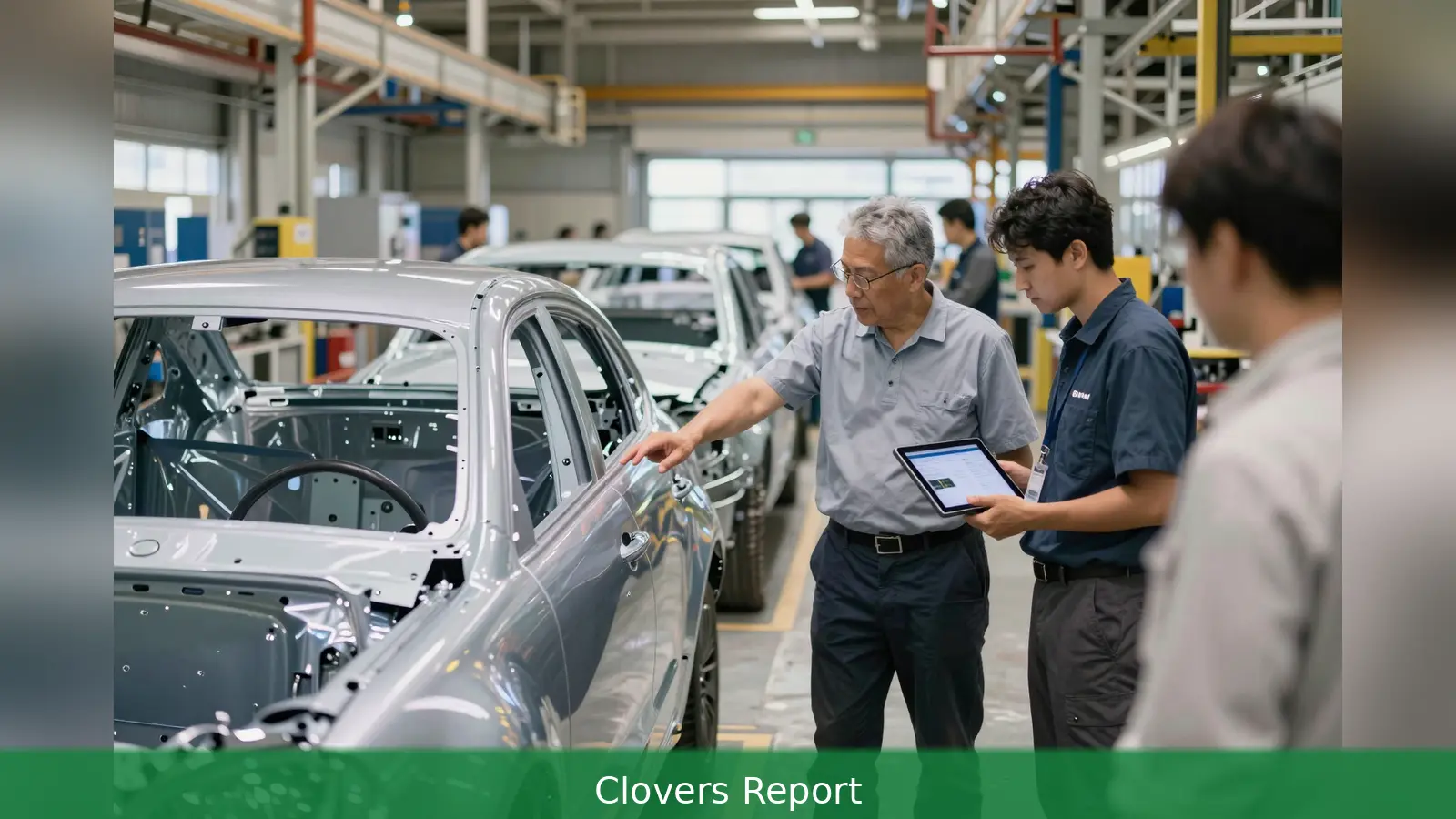
Ford has quietly dialled back part of its automation bet, rehiring 350 veteran engineers and crediting their return with measurable quality gains. The company says the move has already pushed it to the top of the JD Power Initial Quality Survey and delivered, in CEO Jim Farley’s words, "literally hundreds and hundreds of millions of dollars of a tailwind" in lower warranty and recall costs. The hires reverse a multi-year shift toward automated inspection and place experienced specialists back into hands-on quality roles, working alongside younger staff and supplier recruits. Ford presents the change as a targeted correction rather than an abandonment of AI: the veterans will both catch issues on the line and reprogram the systems that missed them.
350 veteran engineers will focus on catching failure points earlier in the production process and on rebuilding the human expertise Ford says was lost when it leaned heavily on automated systems. The company drew the recruits from former Ford employees and from people working at suppliers, and assigned them to a mix of hands-on inspection, upstream design validation and technical mentoring for junior engineers.
Why Ford pulled back from automation
Ford's executive team has described a period in which confidence in automated quality systems outpaced their real-world performance. Chief operating officer Kumar Galhotra said the company had been, quote, "relying more and more on automated quality systems" with disappointing results, so it "brought back technical specialists" whose job is to hunt for failure points before a part ever reaches the plant floor, quote end. The rehiring is thus framed as a targeted response to systemic blind spots rather than a wholesale rejection of digital tools.
Charles Poon, vice president of vehicle hardware engineering, acknowledged the limits of an AI-first approach. "Mistakenly we thought that by just introducing artificial intelligence and ingesting the design requirements that we had, that that would produce a high-quality product," he said, framing the rehiring as a correction to overconfidence in AI alone. That admission echoes the operational case Ford presented: automated systems missed signals when training data lacked the tacit, hands-on knowledge that experienced engineers carry.
The company says the operational result is fewer defects reaching production and lower downstream costs. Ford executives linked the rehiring and attendant process changes to a fall in warranty and recall spend and to the automaker's jump to first place among mainstream brands in the JD Power Initial Quality Survey released this week. That survey placement was offered as measurable evidence that restoring on-the-ground engineering oversight can correct the kinds of failures automated systems amplified when they were fed incomplete or low-signal inputs.
How the returned engineers will be used
The rehired cohort now works alongside younger staff on quality inspection and system tuning. Ford says their immediate tasks include shoring up quality on current models and working on upstream design validation so parts are vetted before they reach the plant floor.

Executives described the veterans as mentors who will pass tacit, hands-on knowledge to junior engineers and will reprogram and improve the AI tools that underperformed.
That reprogramming work is precise and technical. Ford listed rebuilding data pipelines, auditing AI outputs, and embedding experiential rules among the veterans' priorities. The company argues those activities sit at the centre of a hybrid quality-control model that pairs seasoned judgement with automated detection, rather than treating machine outputs as final. In practice, that means the engineers will both spot issues the systems miss and adjust the systems so the machines learn from the corrective steps humans take.
Ford framed the rehiring as economically significant. CEO Jim Farley said lowered warranty and recall costs have contributed, quote, "literally hundreds and hundreds of millions of dollars of a tailwind for Ford on cost," end quote. That language underlines the business case: mistakes that escape into the market cost manufacturers far more than the up-front investment in experienced oversight.
Ford emphasised it's not abandoning AI. Executives described the rehired engineers as a bridge between institutional knowledge and automated tools, rather than as replacements for modern detection systems.
The veterans are expected to reprogram existing quality tools so the algorithms reflect real-world engineering judgement. That balance is the official framing: keep the speed and scale of automation, correct its blind spots with human experience, and reduce the expensive downstream consequences of missed defects.
For younger engineers, the scheme also is an on-the-job training programme. By pairing novice staff with seasoned specialists, Ford aims to capture tacit knowledge that otherwise disperses when experienced people leave the company or shift to suppliers. In effect, the rehiring is both a quality-control intervention and a knowledge-retention programme.
Ford's public statements place the newly rehired team at the front line of quality. The company said the veterans will be deployed immediately to address current-model issues and to tighten upstream checks so fewer flawed parts ever arrive at assembly lines. Executives argue the combined effect is a hybrid process that reduces defects, cuts warranty and recall costs, and strengthens the data that underpins future AI work.
Putting experienced engineers back into the loop is a clear corrective to a specific operational problem: when training data and real-world complexity diverge, automation can amplify mistakes rather than catch them. Ford's move is a reminder that in complex manufacturing, machines need human judgement to reach their potential.
Related Articles
- What Person of Interest teaches about AI's values
- AI demand could force $270 iPhone Pro price rise
- Opendoor cuts 250 jobs in India as AI reshapes outsourcing
One concrete fact anchors Ford's change: 350 veteran engineers are now at the centre of the automaker's quality rebuild. Originally reported by techcrunch.com.
This article was created with AI assistance.


