
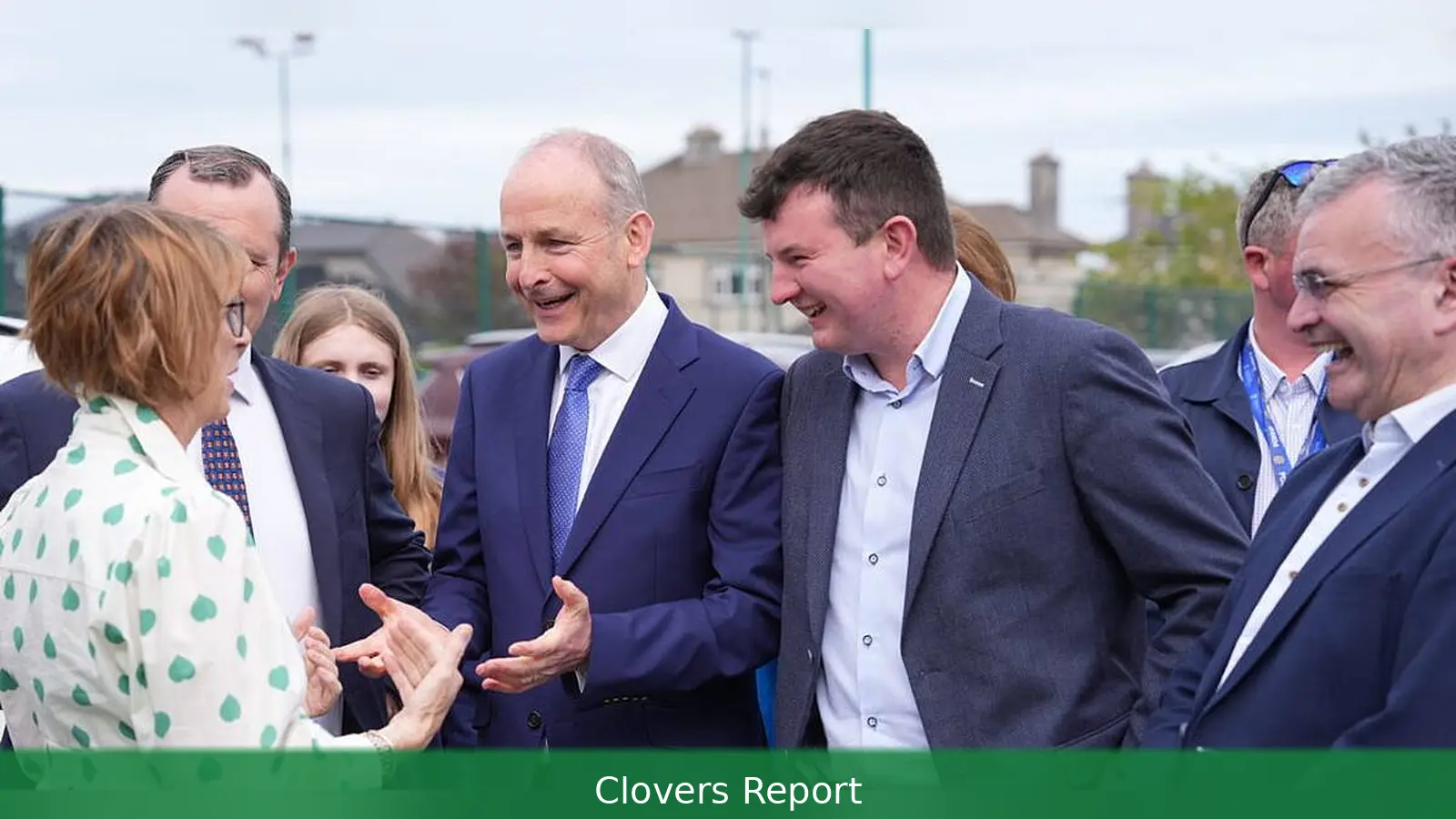
8.9 percent. That's the share of first-preference votes Fianna Fáil’s Galway West candidate recorded in an unofficial tally, a figure that crystallises a disappointing night for the party on May 23. In Dublin Central the party’s newcomer John Stephens was excluded after the second count and lost his deposit, while Taoiseach Micheál Martin called the outcomes "a poor result, no question about that" and promised reflection. The performances expose ongoing vulnerabilities for the party that leads the coalition and set a practical timetable for internal reckoning once Ireland’s EU presidency ends at the end of 2026.
Fianna Fáil arrived at both by-election counts on May 23 with low expectations. Delegates at the party ardfheis had largely written off the contests in advance, and senior ministers and organisers made that point after the results. Still, the scale of the underperformance in two constituencies where the party sought to hold or regain ground left a sting.
What happened on the night
In Dublin Central the party’s campaign collapsed early. John Stephens, a first-time Dáil candidate, was excluded after the second count. Count reports show Stephens failed to hold enough transfers and, as a consequence, lost his deposit. The result was a sharp reversal for a constituency that Fianna Fáil had expected to contest more strongly.
Darragh O’Brien, the transport minister and Fianna Fáil director of elections, described Stephens’ run as "a very positive campaign" but accepted the difficulty of the seat, noting it was one of only three constituencies the party didn't win at the last general election. O’Brien said the party was "disappointed" with the result but insisted Micheál Martin’s leadership was "absolutely not" in question.
In Galway West the pattern was similar. An unofficial tally showed the party’s candidate, Cillian Keane, winning 8.9 percent of first-preference votes.
Keane himself said the vote was below expectations and promised the party would "reflect" and do its "homework".
Micheál Martin linked parts of the poorer showing to both national and local factors. He told reporters that the cost-of-living squeeze tied to the war in the Middle East had been a factor for some voters and that concerns about delayed infrastructure had featured on doorsteps in Galway. He also contrasted Fianna Fáil’s result with stronger showings from Fine Gael’s Seán Kyne and Independent Ireland’s Noel Thomas, figures who had built profile at the previous general election.

Why the results matter
The immediate political reading is straightforward. By-elections are rarely kind to governments and Fianna Fáil ministers emphasised that reality in private and in public. That line explains part of the muted reaction inside the party. Around 2,000 delegates attended the recent ardfheis and several senior members argued there was little appetite at the conference for reopening leadership tensions immediately.
But the votes also underline continuing vulnerabilities for the party while it leads the coalition. Senior figures admitted there's work to do on local organisation and campaign strategy. The party remains the largest in the Dáil and in local government, a fact often invoked at the ardfheis, yet the by-election returns signal erosion in areas where Fianna Fáil wants to remain competitive.
Practically, organisers face a clear deadline for internal review. Party commentators and delegates expect the leadership question to resurface after Ireland’s EU presidency ends at the end of 2026. That timetable matters because it gives the party a finite window to carry out promised finance and organisational reviews, and to answer questions about ward-level strength and candidate selection before attention turns to succession.
Within the party the reaction was mixed. Some senior figures framed the night as a setback to be studied rather than an existential crisis. Others recorded privately that Micheál Martin may not lead Fianna Fáil into the next general election, a debate many expect to re-emerge when the demands of the EU presidency subside.
Politically the arithmetic is plain. Governments often pay a price at by-elections. For Fianna Fáil the calculation now is whether those losses are temporary, driven by local issues and the generalised anti-government mood that can accompany by-elections, or whether they represent the start of a longer shift in voter tendencies in urban and western constituencies.
In the weeks ahead party organisers say they will analyse transfers, turnout and local messaging. Finance and organisational reviews promised by Fianna Fáil ministers are likely to follow that analysis. How aggressively those reviews are pursued, and whether they produce visible change, will shape the party’s internal politics ahead of the post-presidency moment at the end of 2026.
For now the leadership and many delegates are choosing to contextualise the losses. They point to the party’s continued position as the largest grouping in the Dáil and local authorities.
They also remind colleagues that by-elections are an imperfect thermometer of long-term strength. But the 8.9 percent in Galway and the early elimination in Dublin Central are stubborn facts that will be hard to set aside.
Related Articles
- Putin vows retaliation after dorm strike kills six
- China tells offshore brokers to stop onboarding by Oct 31
- 2 killed as Ukrainian drones hit Russian oil city
The next clear milestone is when Ireland hands over its EU presidency, after which internal debate over leadership and strategy is likely to re-emerge. Ministers have signalled finance and organisational reviews will follow the by-election analysis.
This article was created with AI assistance.


