
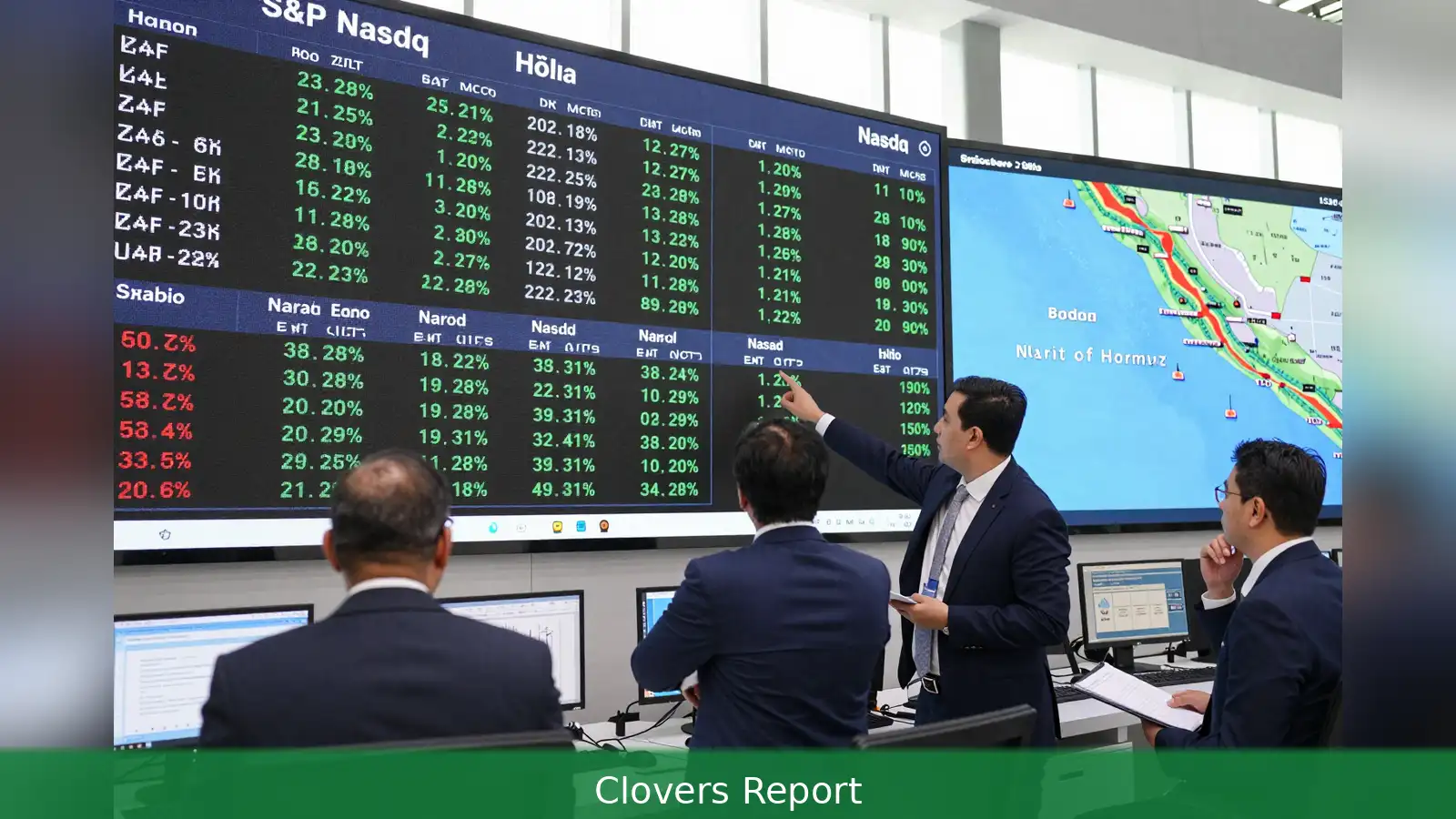
The S&P 500 rose 1.2% and the Nasdaq jumped 2.1% on Monday after President Donald Trump signalled renewed peace talks with Iran following U.S. airstrikes over the Strait of Hormuz on the June 27-28 weekend. The move reversed a pre-weekend slump, snapped a five-session losing streak for major indices and pushed the Dow Jones Industrial Average to a record close above 52,000, according to Dow Jones Market Data. Households, corporate treasuries and energy-intensive sectors were immediate beneficiaries as implied risk premiums fell. The pattern of Monday gains after weekend de-escalation has become a repeatable market dynamic traced by MarketWatch and Morningstar reporting during the second quarter of 2026.
Households, corporate treasuries and energy-intensive sectors pulled ahead on Monday, after markets reacted to Mr Trump's signal of diplomatic outreach following the weekend strikes over the Strait of Hormuz. Equity investors in large-cap U.S. stocks posted the clearest gains, with the rally reversing losses that had built up before the weekend and leaving futures pointing higher at the open.
Which assets moved and why
The immediate winners were plain to see. The S&P 500 and Nasdaq both closed well off their pre-weekend levels, while the Dow achieved a record close above 52,000, a data point recorded by Dow Jones Market Data and cited across coverage. Risk-on flows reduced hedges and compressed the implied geopolitical risk premium, lifting portfolios exposed to consumer demand and industrial activity. Energy-sensitive portfolios, which had been trading with a premium for potential supply disruption, saw that premium evaporate rapidly as oil prices sold off.
That selling in oil markets had already shown up earlier in June when a mid-June cancellation of planned strikes produced a similar unwind. On that occasion traders removed the geopolitical premium and Brent crude and other global benchmarks fell in the range of 4 to 5 percent. Crypto markets were not immune. Bitcoin jumped roughly 3 percent and crossed the $63,000 level on the de-escalation trade, a parallel move market reports tracked alongside equities and oil.
Why Mondays have become predictable
MarketWatch and Morningstar reporting have traced a clear sequence through the second quarter of 2026: weekend flare-ups or strikes, followed by Sunday-night calming signals or diplomatic outreach, and then a risk-on jump on Monday. The June 27-28 strikes produced Monday gains of the size cited above, and that pattern isn't an isolated incident. Early examples in the cycle included the June 11-12 episode when President Trump cancelled planned strikes; the cancellation corresponded with an immediate market bounce. In that mid-June case the S&P 500 climbed about 1.8 percent, the Nasdaq rose roughly 2.5 to 3.0 percent, and the Dow gained near 1.9 percent, according to contemporaneous market accounts.
Strategists offered a behavioural explanation. Ryan Detrik, chief market strategist at the Carson Group, described the June weekend as "a perfect example" of flare-ups that calm by Sunday night and leave futures pointing higher at the open. Analysts point to three persistent forces that have allowed indices to erase early conflict-driven losses even as volatility and higher sovereign bond yields linger. First, confidence in U.S. corporate earnings remains durable. Second, market leadership is concentrated in AI-related and semiconductor names that have been resilient. Third, many investors appear to believe that neither Washington nor Tehran wants a protracted disruption to global energy supplies.
That mix means short-term headlines move prices, but market structure and positioning magnify the effect. Algorithmic desks and traders have learned to anticipate the sequence, which can produce oversized Monday moves as automated flows unwind hedges and reweight exposure. The result has been both abrupt volatility and, on net over the first half of the year, strong returns for large-cap indices.
Dow Jones Market Data shows the S&P 500 and Nasdaq were on pace for their strongest first half since 2024, up 8.7 percent and 11.1 percent respectively through June, reflecting broader market resilience even as the Middle East conflict continued to produce episodic turbulence.
Related Articles
- SpaceX IPO raises $75bn, market pegs value at $1.75tn
- 70s homeowners: 3 ways to fund one last family memory
- US$100m penalty widens discounts on Western Asset bond funds
The next markers are US economic prints and any diplomatic signals from Washington and Tehran. Oil prices and Fed commentary should determine whether Monday's risk-on pattern can extend.
This article was created with AI assistance.



