
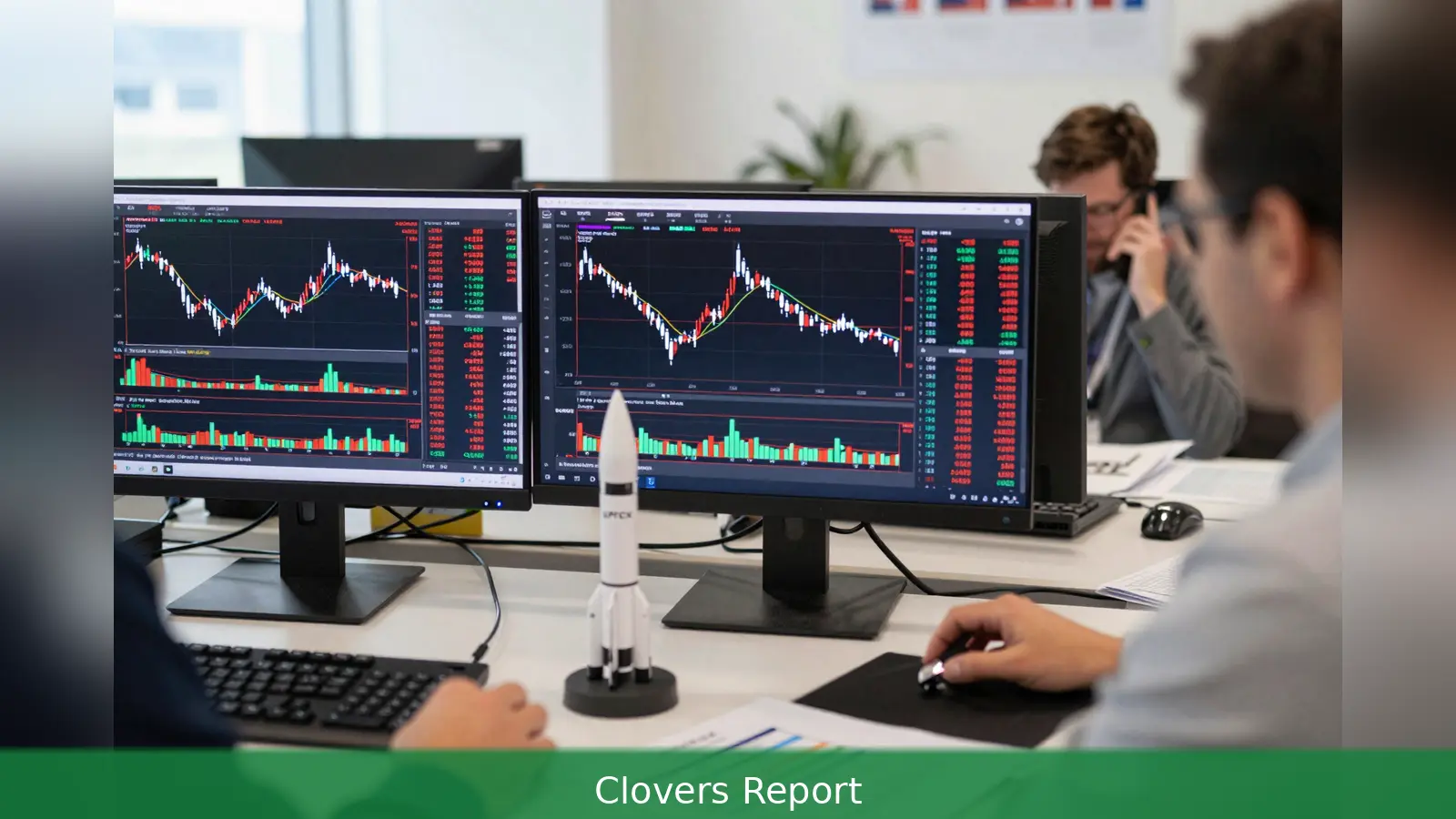
"When your family members start asking about the SpaceX IPO, that's a red flag," said Paisley Nardini, portfolio manager and multi-asset strategist at Simplify Asset Management. Space-sector equities plunged after SpaceX's public debut, with at least four companies down roughly 50 percent in June and others off about 40 percent or more. FactSet shows Virgin Galactic, Redwire, Intuitive Machines and Momentus all down about half for the month, while Planet Labs and Firefly Aerospace were down roughly 40 percent as of Thursday afternoon. The immediate market move has been a reallocation from proxy plays to the newly available direct exposure in SpaceX and a rapid valuation reset across the sector.
"When your family members start asking about the SpaceX IPO, that's a red flag," said Paisley Nardini, portfolio manager and multi-asset strategist at Simplify Asset Management.
How the SpaceX listing rewired the trade
Julian Emanuel, strategist at Evercore ISI, captured the mood with three words: "Dream Big FOMO." That phrase summarises what propelled demand for anything labelled 'space' and what then repriced those holdings once SpaceX listed. Morningstar calculated SpaceX shares, trading under the ticker SPCX, at 39.2 times projected sales for 2027 on the most recent close, using consensus estimates from four analysts and Dow Jones Market Data. Oppenheimer's initiation put an implied valuation on SpaceX near $2.5 trillion after a $135 IPO price and a $150 first-day open. That gap made direct ownership suddenly preferable to thinner proxy plays, and investors acted on the arithmetic.
The mechanics were straightforward. Two space-themed ETFs peaked around May 28. In the days after the IPO, Morningstar and Benzinga reported billions of dollars flowing into ETFs and special-purpose vehicles tied to SpaceX, which drew retail attention away from other technology names and concentrated flows into the clearest asset. With SpaceX now tradeable, the scarcity premium that had lifted proxies began to evaporate.
AInvest's analysis flagged a further complication: Planet Labs and Rocket Lab were already showing steep declines before SpaceX shares began trading. Once the clearest asset was available, substitutes had to justify their prices on business fundamentals rather than narrative. Morningstar and AInvest pointed out that many companies listed in 2026 were priced for near-perfect execution. That implies faster adoption, healthy margins and no major delays.

Space is capital-intensive. Analysts repeatedly note high cost of revenue, sustained research and development spending, and heavy operating expenses. Companies that still rely on future funding rounds face dilution risk if cash flow doesn't scale as projected. The repricing isn't just about headline multiples.
It reflects a new benchmark: either meet the tougher execution bar, or accept a much lower market price.
Retail flows amplified volatility. Morningstar and Benzinga documented the surge of household money into instruments tied to SpaceX, and MarketWatch catalogued across-the-board losses among smaller space-cap companies as those flows reversed. Simplify's Nardini cautioned that household-level enthusiasm often arrives late in a rally and urged disciplined position sizing, advising that speculative allocations remain in the single-digit percentage range of a balanced portfolio.
The sell-off has been broad. FactSet data show Virgin Galactic, Redwire, Intuitive Machines and Momentus down roughly 50 percent in June. Planet Labs and Firefly Aerospace were off about 40 percent or more as of Thursday afternoon. Morningstar quantified SpaceX's oversized price-to-sales multiple, while AInvest and Benzinga framed the move as both an unwind of the proxy trade and a valuation reset tied to execution risk.
Analysts are now foregrounding cash burn schedules, launch cadence, margin trajectory and the timing of contract revenues. For many smaller operators, the market no longer awards a narrative premium. Investors demand milestones and proof of customer wins before reassigning lofty multiples.
One striking point across the coverage is the lack of a single clear near-term catalyst. No regulatory event or major earnings date was consistently cited. Instead, the most concrete timing mentioned in the coverage was the June trading window around SpaceX's June 12 listing and the ETF flows that peaked in late May, which together drove the rapid reallocation pressuring sector valuations.
For investors and portfolio managers, the lesson is familiar and tidy: when the pure play arrives, proxies must earn their keep on cash flow and execution. The narrative trade that lifted many space names has been interrupted by a simple market choice, own the benchmark or accept the benchmark's valuation of you.
Related Articles
- SpaceX IPO raises $75bn, market pegs value at $1.75tn
- Five join Nasdaq 100 as SpaceX IPO looms
- 0.5% PCE shock could force 1.5 Fed hikes
The immediate trigger was SpaceX's June 12 listing and the late-May ETF flows that peaked the proxy trade. Originally reported by marketwatch.com.
This article was created with AI assistance.


