
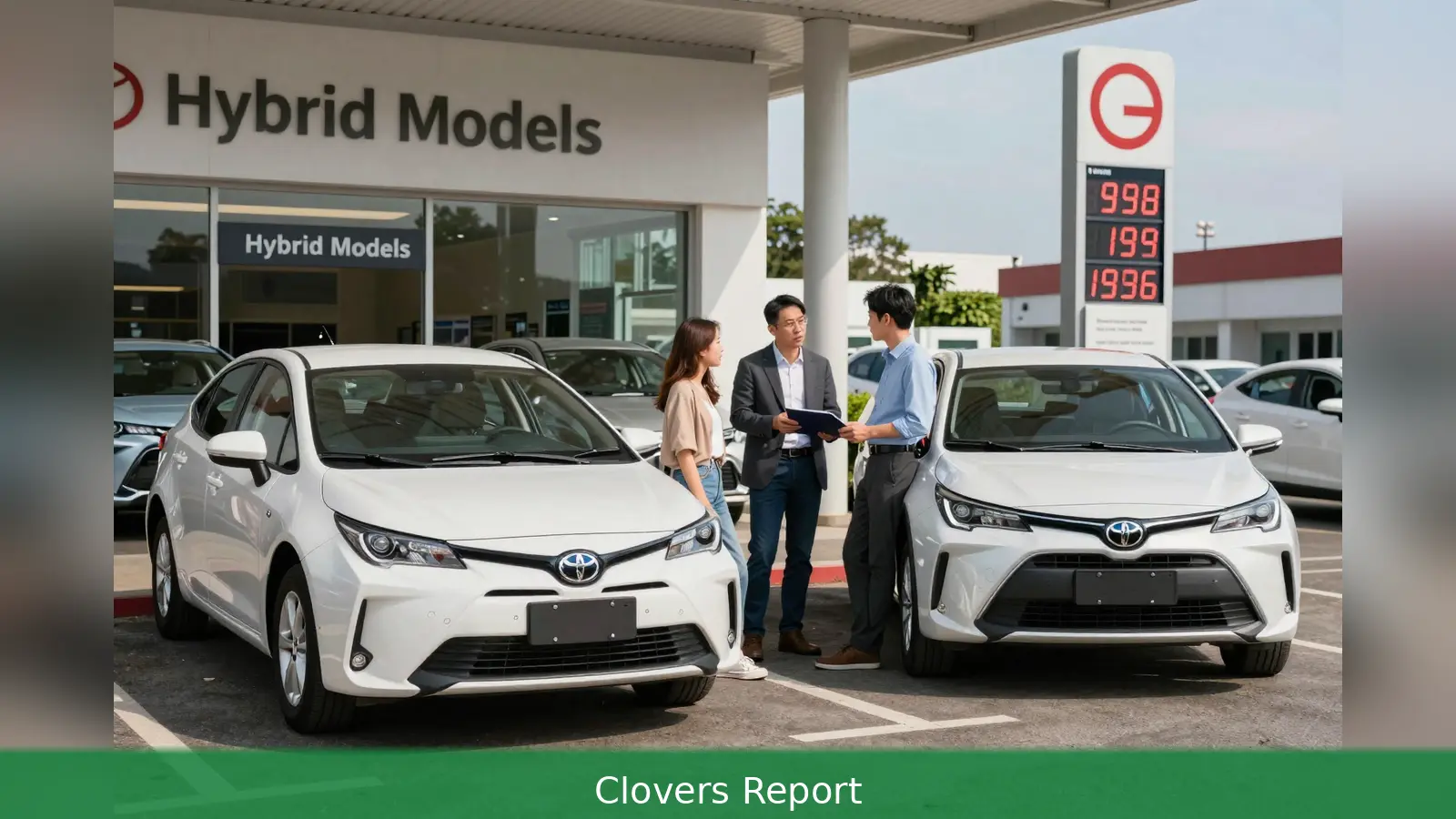
Households and dealers shifted noticeably toward hybrid models after gasoline prices rose more than 20% versus a year earlier, lifting sales for manufacturers that offered established gas-electric lineups. Toyota reported a 1.1% rise in U.S. sales in the second quarter, a gain that narrowed its gap with General Motors as hybrids drove retail traffic. Honda, Hyundai and Kia also posted gains, powered by record or double-digit jumps in electrified vehicle deliveries, while GM recorded a 4.2% decline. The pattern matters because it ties consumer choices directly to fuel costs and dealer inventories ahead of the year-end tally.
Dealers and drivers benefited first and most, as rising pump prices made hybrids a practical choice, not a niche play. That shift in demand left firms that had concentrated capital and inventory on battery-electric vehicles more exposed, while manufacturers with an established hybrid catalogue outperformed peers.
Toyota was the notable winner. The company posted a 1.1% increase in U.S. sales for the second quarter, a result the automaker tied to roughly a 20% rise in sales of electrified vehicles. That momentum cut into General Motors territory at a moment when GM's U.S. deliveries fell 4.2% for the quarter. Toyota's sturdier selling rate is the clearest signal yet that hybrids are returning to centre stage in the mass market.
Hyundai Motor reported a 4% rise in quarterly U.S. deliveries, propelled by a 67% jump in hybrid sales for the first half of the year, according to company figures. Kia recorded about a 3% overall sales gain and said hybrid sales in the quarter rose 152%.
Honda also saw a lift. The company said record electrified sales helped it post an 8.4% increase in second-quarter U.S. sales. Those numbers together show the pattern: established hybrid lineups are pulling buyers who want better fuel economy while keeping the convenience of filling at a conventional petrol pump.
Two industry trackers offered a mixed picture of the market overall. Motor Intelligence estimated U.S. industry sales for June rose 7.5% year on year and put the adjusted selling pace at 16.67 million units, a level above many forecasters. Cox Automotive and J.D. Power provided differing second-quarter outlooks ahead of the earnings window: Cox forecast roughly flat industry sales, projecting a 0.5% decline for the quarter, while J.D.

Power expected a 0.7% increase.
Cox Automotive's senior economist Charlie Chesbrough warned that Toyota's momentum could pose a material competitive threat to GM, saying, "At these rates, and what we're seeing right now in the selling rates, GM may be looking over their shoulder here when we get to the year's end, that Toyota could potentially overtake them as the top selling manufacturer here in the U.S. market."
On the retail front, dealer anecdotes and regional reporting amplified the numeric signal. High-volume hybrid models such as the Hyundai Sonata and the Tucson and Santa Fe SUVs were repeatedly cited as key demand drivers, helping keep showrooms busy even as overall fleet and incentive strategies varied by manufacturer.
That dealer-level demand is tied to an unmistakable price signal. AAA reported that gasoline prices were more than 20% higher than a year earlier. The immediate consequence is straightforward: when fuel becomes more costly, buyers prefer vehicles that cut running costs. Hybrids deliver improved fuel economy and the convenience of refuelling at any conventional station, an advantage over battery-electric vehicles for many shoppers.
Where firms leaned heavily into full battery-electric lineups, the softer EV demand translated into weaker results. But there were exceptions. Stellantis and Nissan managed second-quarter gains despite offering limited hybrid options, helped by turnaround plans and refreshed lineups that included some electrified options. That shows product refresh timing and broader portfolio balance still matter when consumer preferences shift.
Motor Intelligence's June estimates and the set of second-quarter delivery reports released around July 1 provided the most recent vantage on how consumer choices and fuel prices affected U.S. auto volumes. Analysts at Cox had projected full-year first-half sales down 2.9% to a 15.8 million vehicle pace, with retail sales expected to decline about 3.4% as of their prior-week outlook.
Hybrids, in the dealers' words and the manufacturers' numbers, have become a growth engine. Hyundai and Genesis North America CEO Randy Parker put it plainly on a company call: "Hybrids are definitely our growth engine right now." That claim finds backing in the quarterly delivery figures across multiple brands.
Related Articles
- Bitcoin ETFs fail to prevent 33% year-to-date slide
- S&P 500 rises 1.2% as Trump signals Iran talks
- 70s homeowners: 3 ways to fund one last family memory
Toyota's 1.1% Q2 U.S. sales gain, backed by roughly a 20% rise in electrified deliveries, is the concrete number that will shape manufacturers' inventory and marketing choices as they head into the year-end tally. Originally reported by CNBC.
This article was created with AI assistance.


